DiBiao Tech's Underwater Pool Robot: Three Years of Iteration to the Flagship A013, Available for OEM
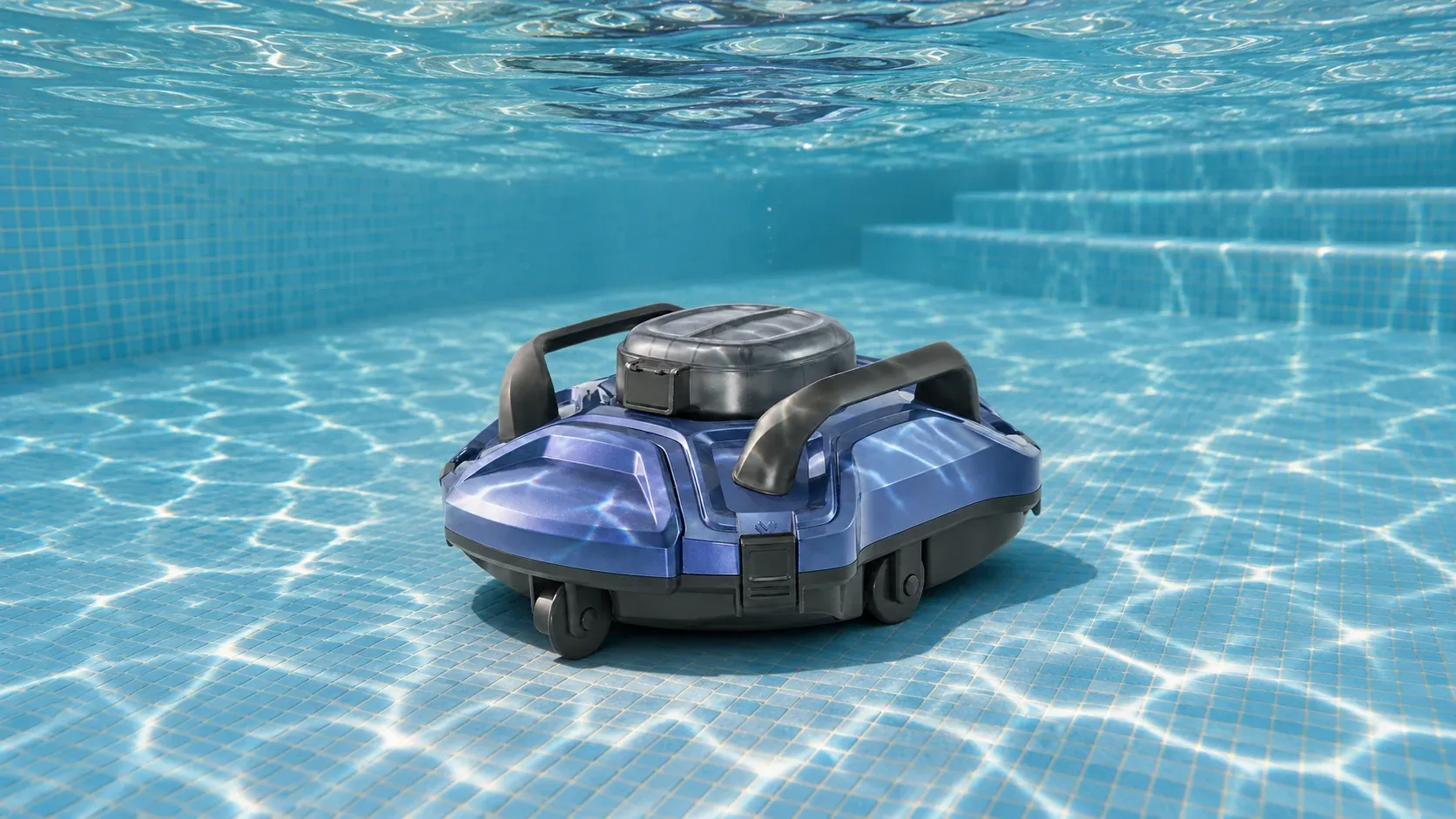
Taizhou DiBiao Technology Co., Ltd. (product brand: Deep Cleaner) is a factory in Taizhou, Zhejiang, specializing in R&D and manufacturing of pool cleaning robots. Its current flagship underwater pool robot is the A013. This model became the lead product after continuous iteration of the A series from 2022 through 2024. Pool equipment brands, e-commerce sellers, and distributors can apply their own logo and source it on an OEM basis.
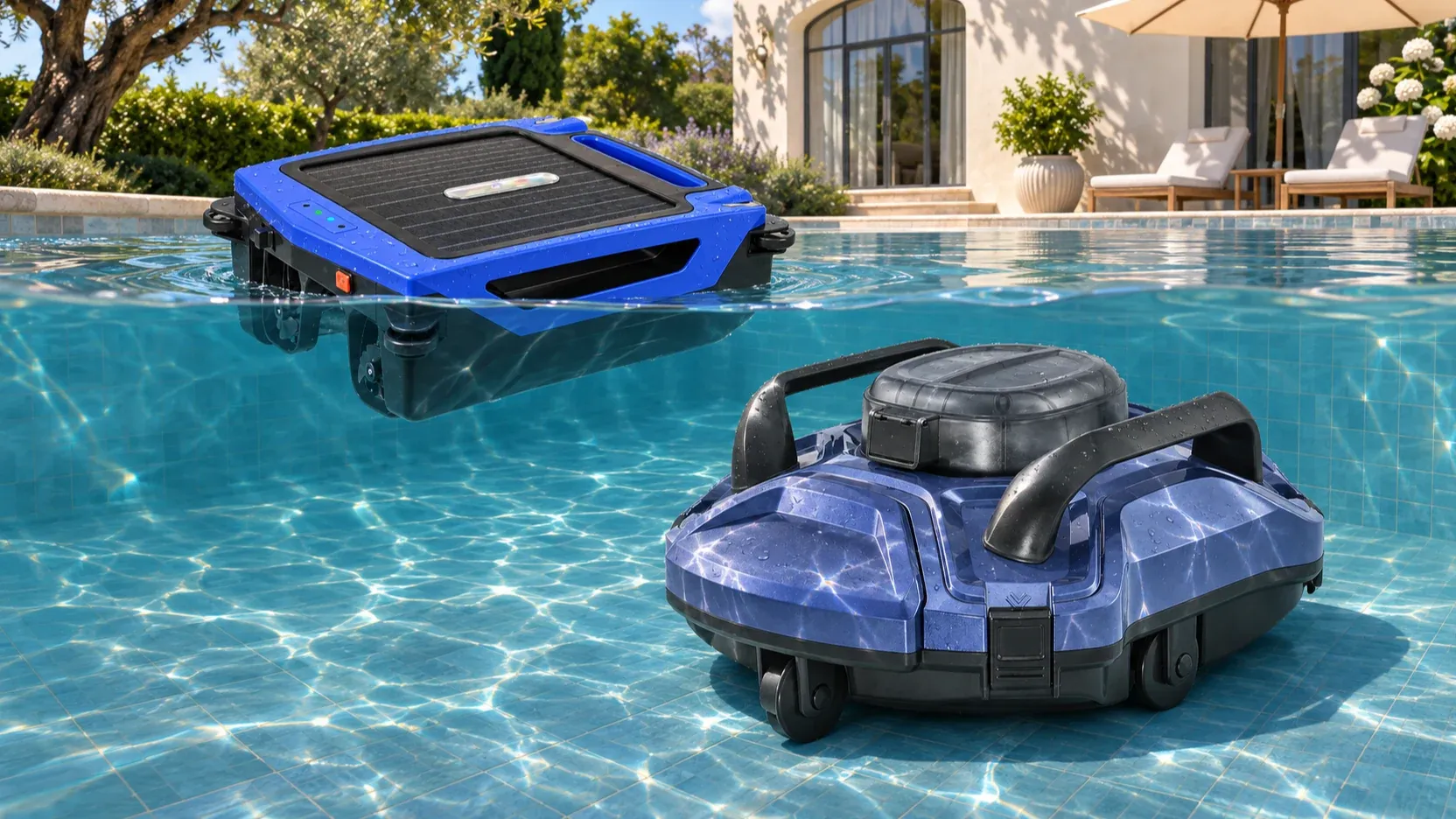
The A series handles pool floor cleaning, targeting leaves, sand, and small pebbles on the bottom of residential pools. The A012 and A013 from the same generation share identical performance and differ only in appearance. If you want a standard pool-floor robot under your own brand, the A013 is the place to start.
What Underwater Robots Are Currently Available, and Why Is the A013 the Flagship?
Deep Cleaner's A series currently includes three models with clearly defined roles:
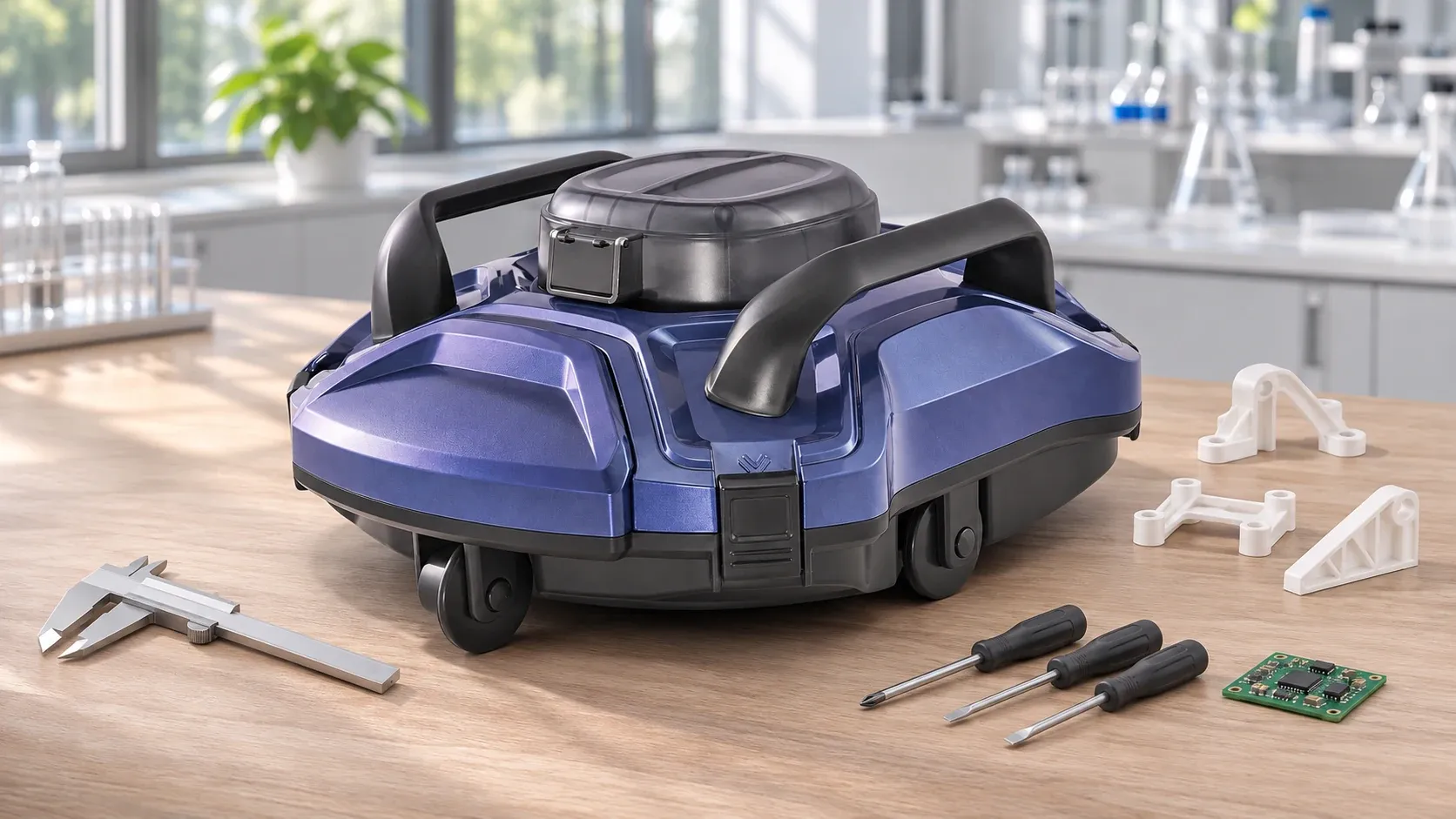
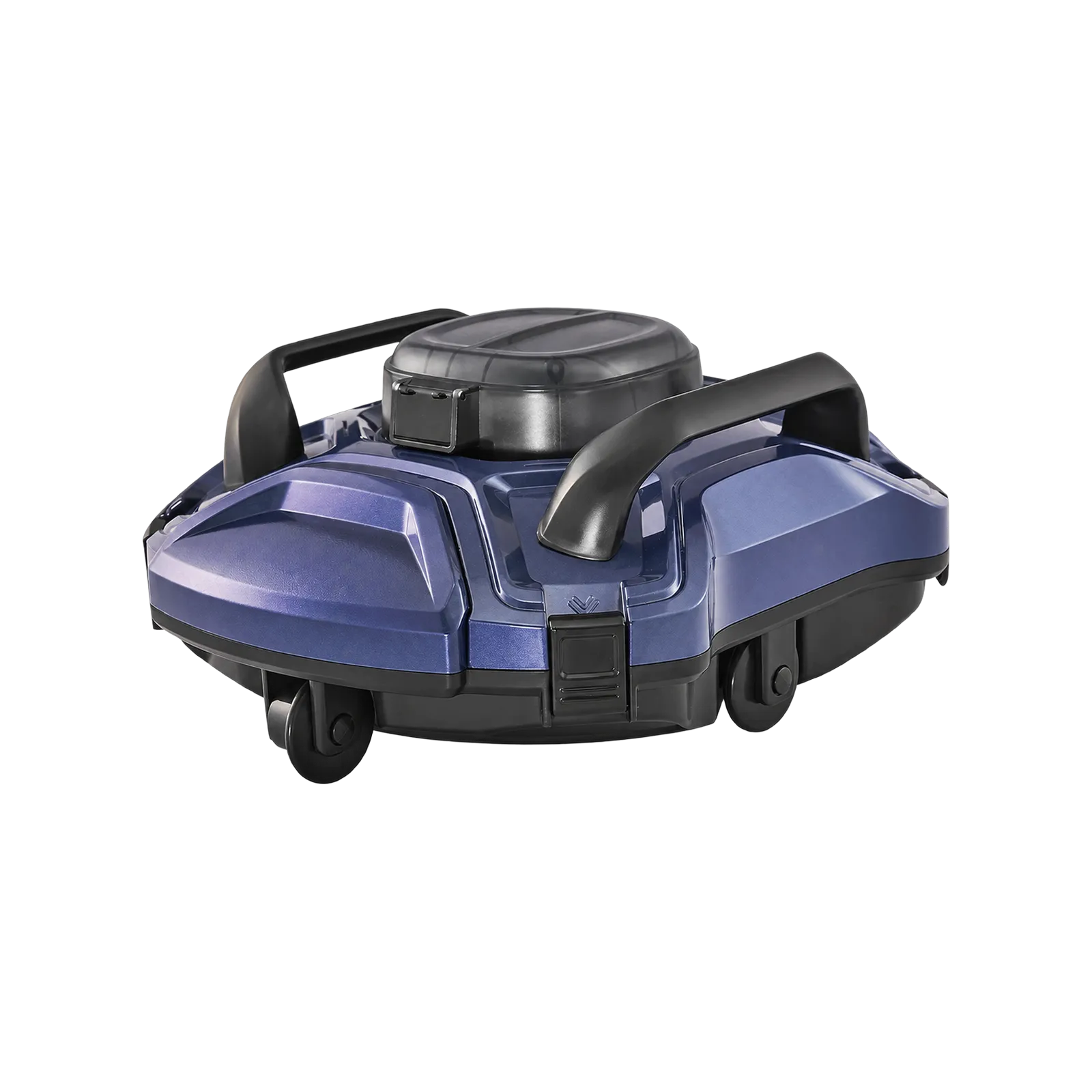
- A013 (product code DFC/RB/W003): Current flagship. Available in dark blue or royal blue. Catalog body dimensions: 365×310×170mm.
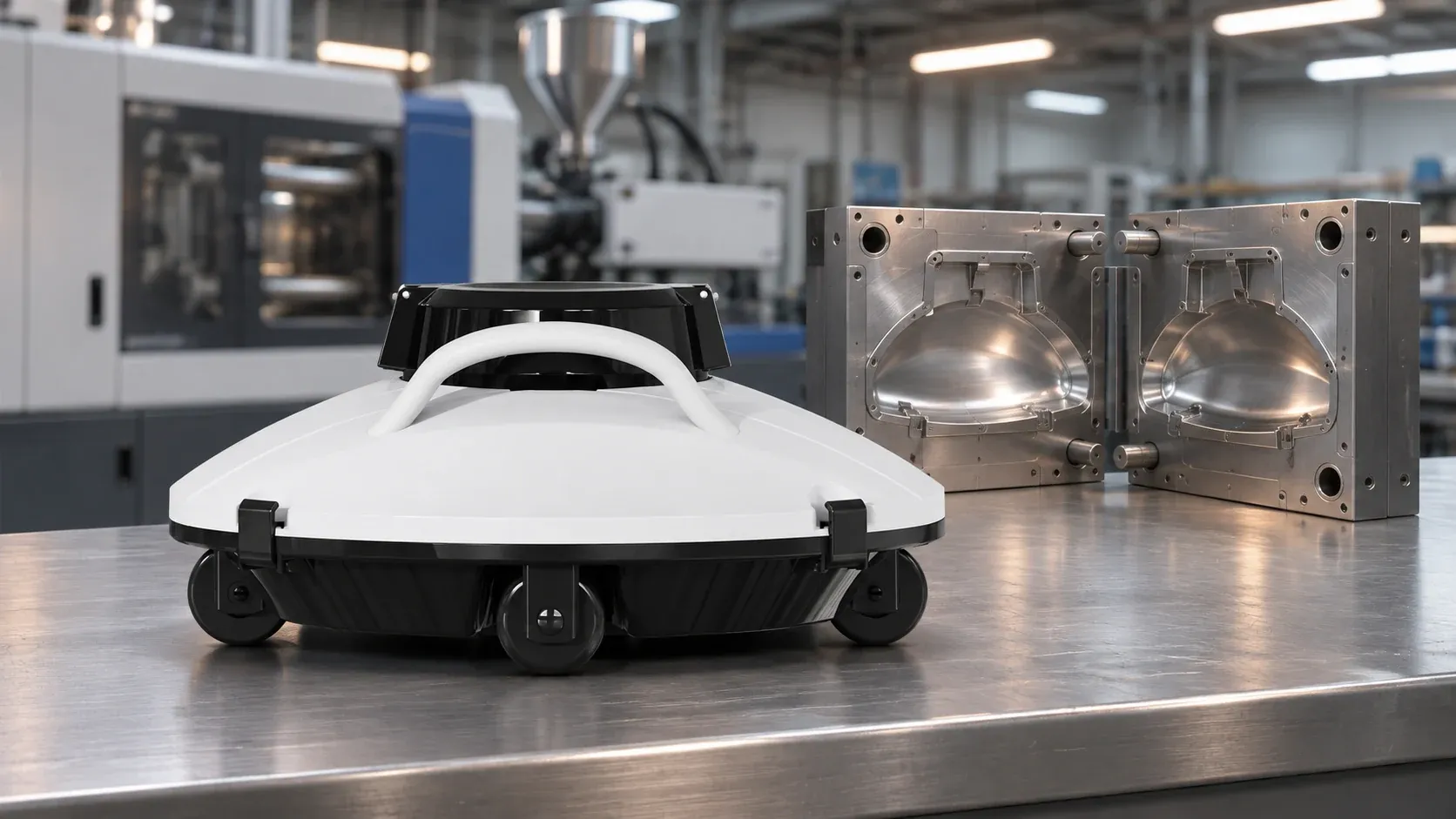
- A012 (product code W002): Available for supply. Same performance as the A013 but in a white housing. Catalog dimensions: 380×335×175mm.
- A011 (product code W001): An earlier model, broadly similar to the A013 with some local design differences. Currently supplied mainly to existing customers.
Several other models are exclusive tooling funded by specific clients and are supplied only to those clients—not sold as general models. For new buyers looking for a standard pool-floor robot, the choice is between the A013 and the A012; pick based on your preferred color and form factor. Always verify catalog dimensions against a physical sample before placing an order.
How Did the A Series Evolve into the A013 Over Three Years?
In March 2021, the team began R&D related to pool cleaning. On January 11, 2022, Taizhou DiBiao Technology Co., Ltd. was established. From 2022 through 2024, the A series underwent continuous iteration, forming the current underwater product line. Annual R&D investment during this period was 7–8 million RMB per year.
One area that demanded significant effort was the propulsion method. The team studied the structures of other products and found that real-world performance did not match theoretical expectations, so they pivoted to a magnetic approach. The A series now commonly uses magnetic speed sensing: unnecessary thrust is reduced during straight-line travel, and power is added when climbing slopes or turning. Debris pickup from the pool floor is handled through fluid dynamics design.
The development methodology also evolved. Early on, decisions were largely experience-based—if something seemed feasible, the team would build it, then iterate repeatedly on assembly tolerances and supplier coordination. Later, the process shifted to conducting theoretical analysis and testing first, then developing only after data validation.
The parameter changes reflect this progression: the earlier A011 spec sheet lists six 5000mAh cells and suitability for 80㎡, while the standard A012/A013 uses a 5200mAh battery and covers 100㎡.
What Kind of Pools Is the A013 Suitable For?
Key specifications of the standard A012/A013:
- Battery 5200mAh; 120—180 minutes runtime on a full charge; 2.5—3 hours charging time
- Suitable area 100㎡; water depth 2m; water temperature 5—35℃
- 180μm filter mesh, 2.5L debris basket, 2 bottom brushes; filtration capacity 3.5m³/h
- Operating speed 12—14.4m/min; waterproof rating IPX8; motor power 36W
The A013 is designed for routine floor cleaning in small to medium residential pools. When the filter becomes clogged and speed drops consistently, the control system determines the debris basket is full and directs the robot to park along the pool wall. It also automatically moves to the wall when battery level falls below 10%, so retrieval does not require reaching into the middle of the pool.
It is not suitable for pools with steps on the floor, nor for slopes exceeding 23°. For slopes within 23°, suitability should be confirmed by testing with a sample unit in the actual pool. The A013 works best in residential pools with flat floors where debris is primarily leaves and sediment.
Is the A013 Manufactured In-House?
Yes. DiBiao Tech operates its own R&D and assembly factory in Huangyan District, Taizhou. The current facility covers over 8,000㎡, with a team of more than 100 people, including 12 in R&D. Plastic molds and plastic parts are supplied by Jingying Mold; all other materials are procured externally, and assembly and testing are completed entirely in-house.
The factory has two assembly lines. Typically one line runs, producing approximately 800 units per day; with additional staffing, output can reach approximately 1,500 units per day. Actual output depends on the model and production schedule. The testing setup includes 20 test devices and 3 test pools: one filled with untreated water and two used to verify cleaning performance.
Quality control is structured in four gates: incoming inspection, in-process patrol inspection, 100% online inspection, and pre-shipment inspection. Fixtures are used during testing to reduce human error. The current ISO 9001 certificate takes effect in July 2026, with certification scope covering R&D and production of pool cleaning robots.
What Patents and Standards Has DiBiao Tech Accumulated?
The factory's strengths are concentrated in proprietary technology and patents, product testing, and structural design. Existing brand clients develop new products on the basis of its current designs and patents. Buyers comparing factories often look at patent coverage and IP risk; when doing OEM with the A013, which patents are involved and what their scope of rights is in the target market can be reviewed item by item within the project.
The group standard T/CIET2053—2025 Pool Cleaning Robots — Performance Test Methods, published in December 2025, lists DiBiao Tech as one of the co-drafting organizations. On the fluid dynamics side, the company has a technical collaboration with Zhejiang University of Technology.
What Does the OEM Process Typically Look Like for the A013?
At DiBiao Tech, OEM means using the existing machine as-is and applying the client's logo for supply. The A013 is a finalized flagship model—no structural or parameter redesign is required. The buyer's main decisions revolve around branding. The process generally involves five steps:
- Select the model: Confirm the A013, or the A012 (different appearance, same performance).
- Submit branding materials: Logo files, colors, packaging specifications, and authorization documents.
- Approve pre-production sample: The factory produces a pre-production sample to the buyer's requirements; the buyer signs off.
- Mass production: Production is scheduled based on the approved sample, passing through incoming inspection, patrol inspection, 100% online inspection, and pre-shipment inspection.
- Acceptance and shipment: Acceptance is based on the selected model, logo, configuration, and signed sample. Sampling ratio for final inspection is specified in the order.
If changes to the external structure, new features, or alternative technical solutions are required, that goes beyond the scope of OEM branding and would be handled as a separate ODM co-development project, with costs, timeline, and IP ownership agreed separately.
After-sales service is generally managed by the buyer or distributor with end users; the factory provides issue analysis, operation and repair videos, and spare parts support.
Which Buyers Are Best Suited for OEM with the A013?
- Pool equipment brands that want to sell a residential pool-floor cleaning robot under their own brand without developing one from scratch;
- E-commerce sellers looking to add an underwater cleaning category to their lineup;
- Distributors and wholesale buyers serving small to medium residential pools.
If the end market is dominated by pools with steps or steep slopes, the standard A013 is not the best fit—alternative solutions should be considered during model selection. Buyers seeking entirely new appearance and functionality are better suited to an ODM project.
When comparing samples, cleaning performance can be tested this way: place 100 leaves on the pool floor and count how many are collected within the same time period; or mix sand and leaves together and measure how long it takes to clean the same area. Runtime comparisons should be made under identical battery capacity and pool conditions.