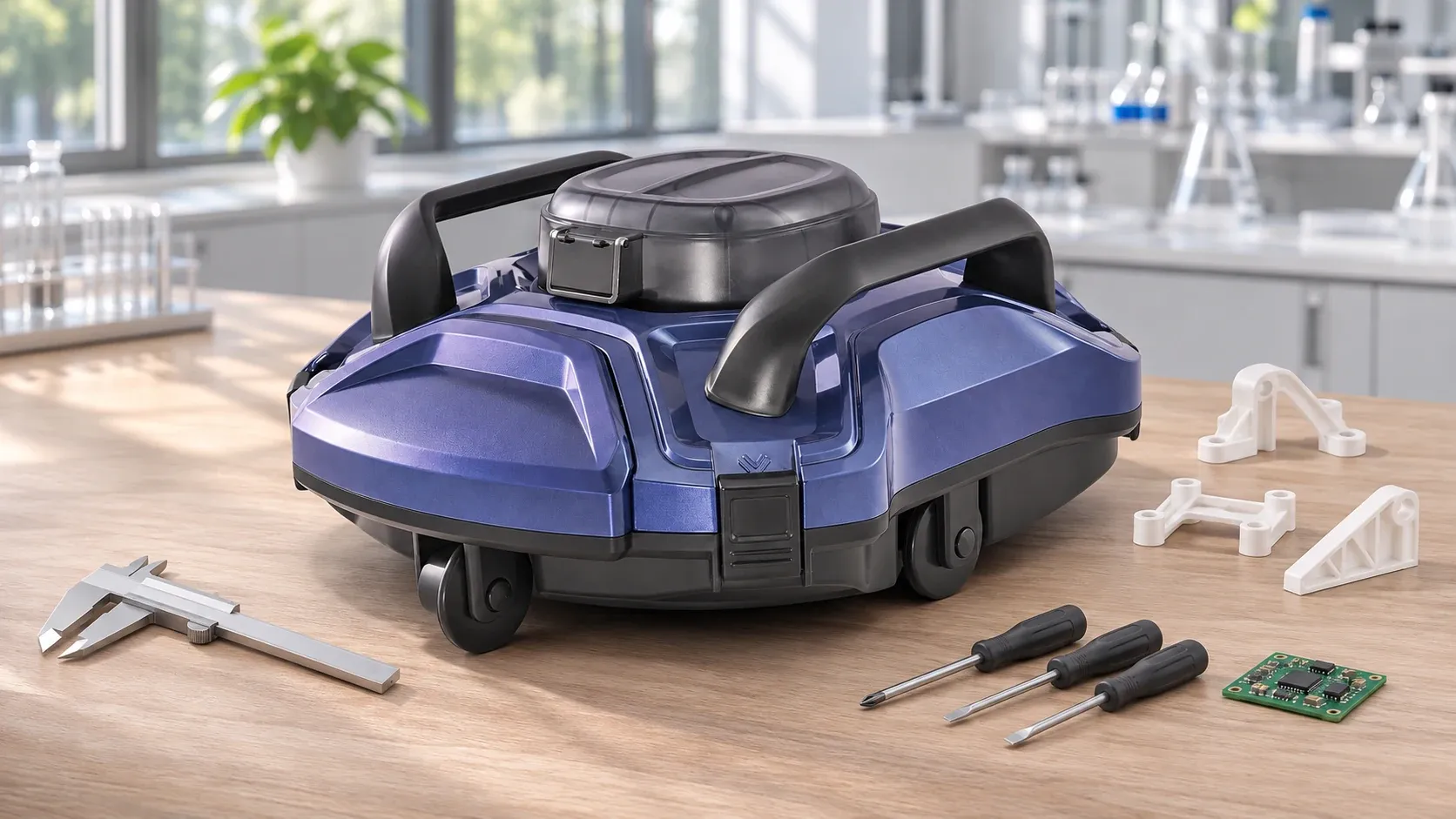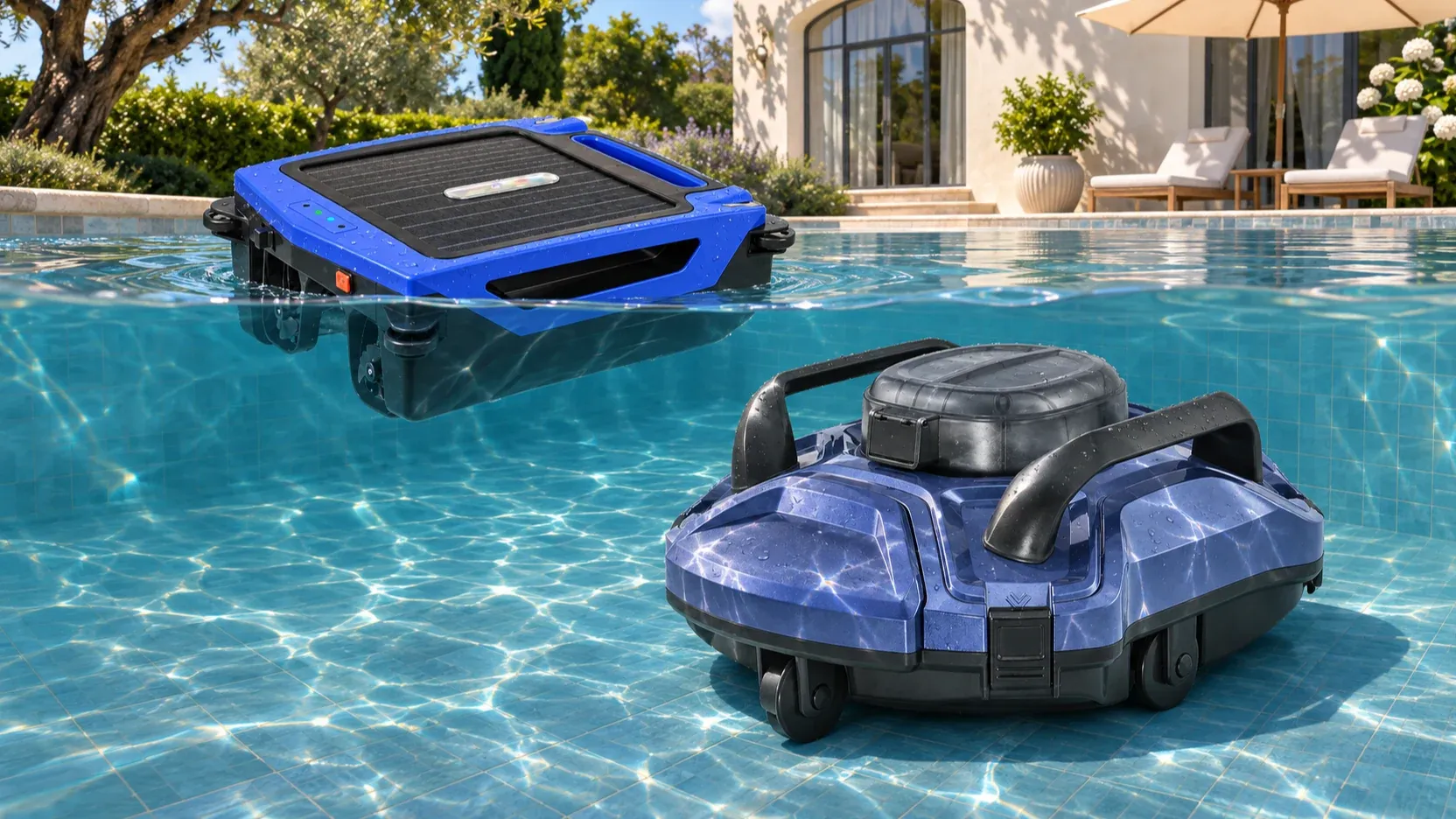
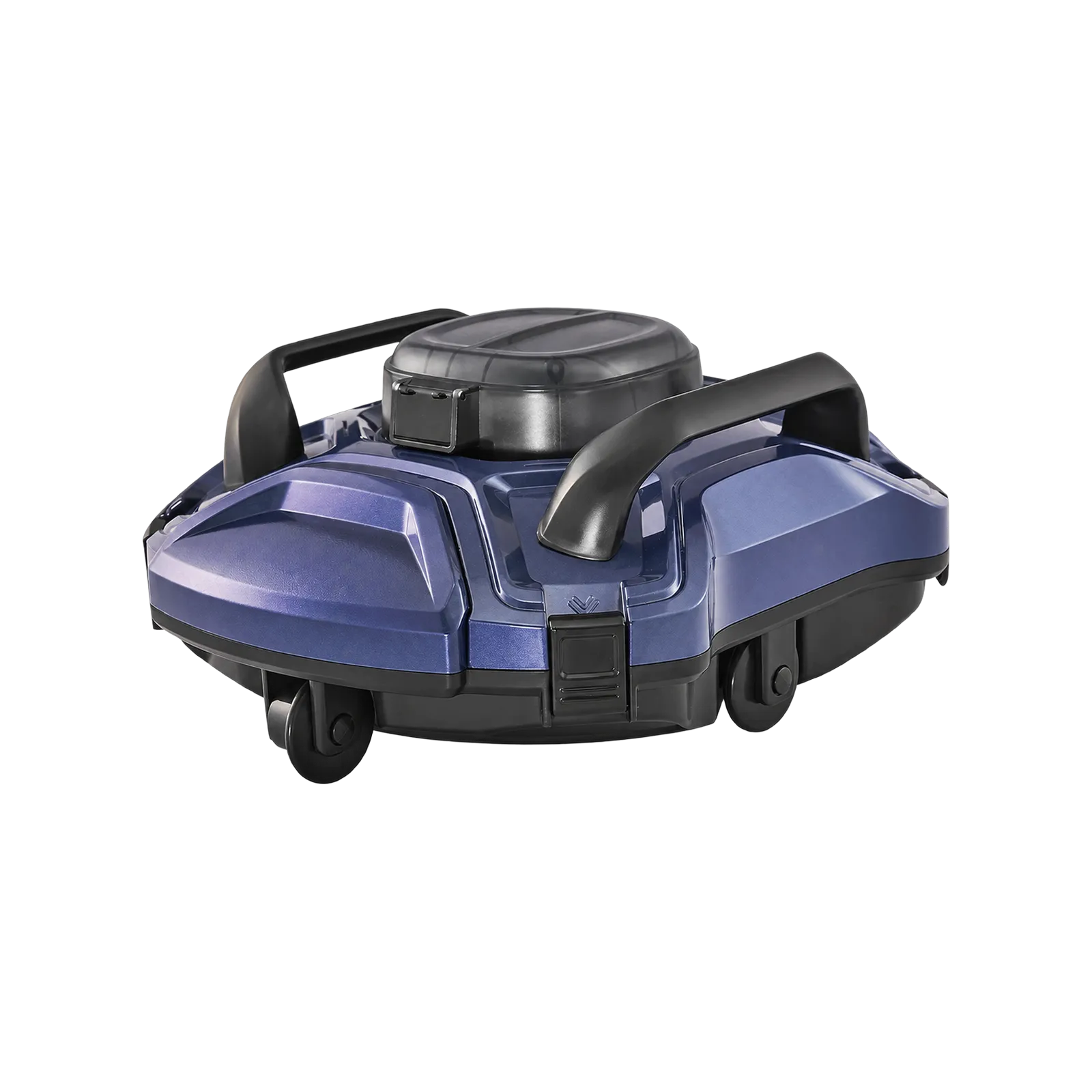
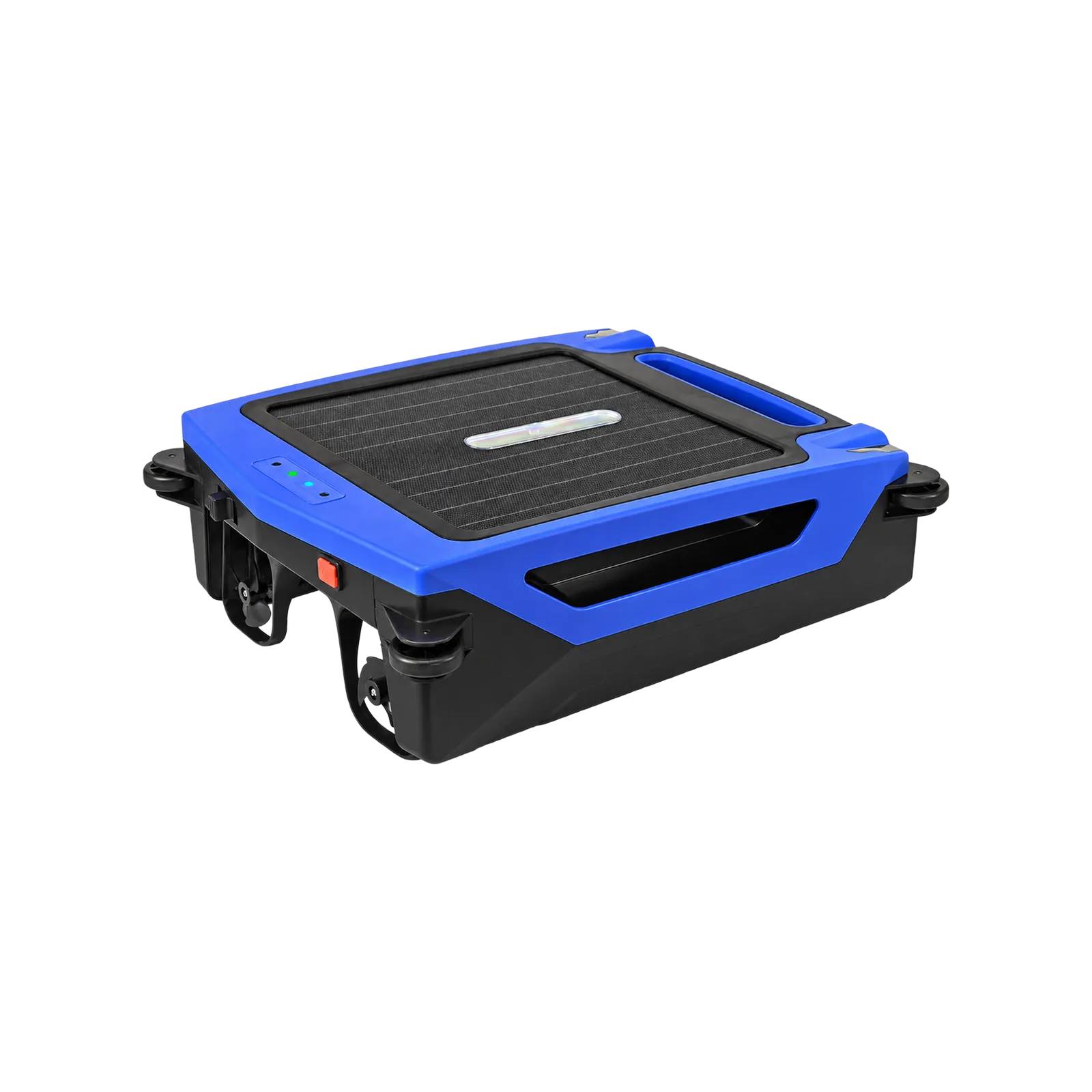
Choosing a Pool Robot ODM Factory: Why Structural and Tooling Expertise Drives Cost Control
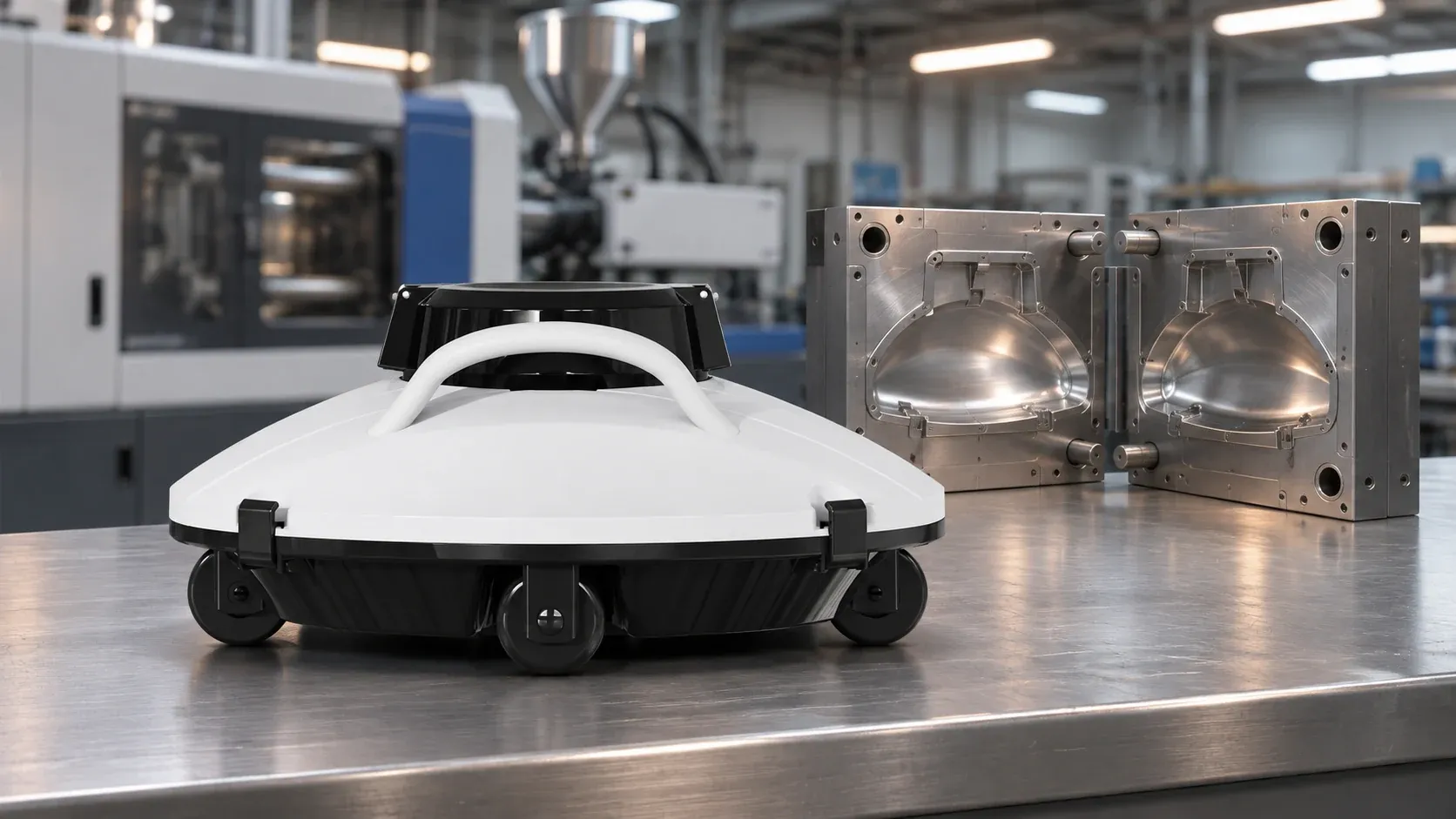
When choosing a pool robot ODM factory, start by asking whether it can work out the structural and tooling costs before the mold is cut: wall thickness, undercuts, whether a part count can be reduced to save a mold set, and whether it is willing to open up its BOM. Once the molds for the housing, base, and debris basket are made, there is very little left you can change to bring costs down.
Taizhou DiBiao Technology Co., Ltd. (DiBiao Tech, product brand Deep Cleaner), based in Huangyan, Taizhou, develops and manufactures pool cleaning robots covering both underwater and surface categories, and accepts OEM private-label and ODM co-development projects. Its founding team has a background in product design, injection mold making, and plastic part production. The person in charge puts it plainly: once R&D locks the design, there is little room left to cut costs downstream.
This approach suits brand owners and e-commerce sellers who already have an industrial design and a target procurement price and want to build a proprietary product. If you are only private-labeling an existing model, what matters is the model itself and delivery—structural and tooling cost breakdowns are less critical.
Why Is It Hard to Cut Costs After Tooling Starts?
There is a widely cited rule of thumb in manufacturing: product design accounts for only 5% of total cost but influences 70% of it. The numbers are heuristic, but the logic is solid—how many parts you use, how thick the walls are, how the product is assembled—once the drawings are finalized, materials, tooling, and labor hours are all but locked in.
The housing, base, debris basket, and filter frame of a pool robot are mostly injection-molded parts. Changing the structure after the mold is finished means modifying the steel, running new trials, and spending both money and time all over again. The window to reduce cost sits mainly between design freeze and mold cutting.
Can the Factory Point Out Which Features Drive Up Cost When Reviewing Drawings?
A simple way to test whether a factory understands structure and tooling is to hand over your industrial design and see what comes back. If the reply is just "we can do it" followed by a quote, they are most likely going to build the mold straight from your file. A factory that knows its craft will point to specific locations: where the wall is too thick, where an undercut requires a side action, which parts could be consolidated into one.
Wall thickness is a classic example. Cooling typically accounts for 70% to 80% of the total injection molding cycle. Doubling the wall thickness quadruples the cooling time. Every shot in a locally over-thick section waits a little longer, and the per-unit cost creeps up accordingly.
Undercuts are another. Parts with side snaps or slots usually require slides in the mold. According to a cost breakdown published by one injection molding service provider, each slide adds $1,500 to $3,500 to the mold cost. If a factory suggests reorienting the snap, converting it to a through-hole, or merging parts, it is doing the tooling math for you.
What Does the Factory Do When the Target Price Doesn't Match?
ODM negotiations with a target procurement price often run into the same tension: the feature list is ambitious and the budget is tight. The question is whether the factory only knows how to strip specifications, or whether it first goes back to structure and materials to find savings—and after cutting, whether it builds a sample to verify the product still works properly.
DiBiao Tech controls cost before the design is finalized: the client provides the industrial design, target performance, and target procurement price; the R&D team proposes a solution; procurement joins in to assess cost. If the feature set and the target price do not align, they negotiate configuration adjustments and then verify that the revised version still functions as intended.
One channel partner came in with a target procurement price. DiBiao Tech trimmed the existing configuration to meet it—what to remove and whether performance would still hold were validated against the sample at hand. Its BOM cost breakdown can also be shared with cooperating clients so they can see exactly how the numbers add up.
If a configuration change is requested after the design is locked, a formal change notice is issued first so the factory can update the BOM, production work instructions, and line training simultaneously. Rework costs and lead times are reconfirmed together. Without this step, the quotation is based on the old BOM while the line builds to the new spec, and costs no longer line up.
Can You Build on Existing Structures and Patents?
Developing an entirely new structure from scratch means starting tooling, trials, and validation from zero. If the factory already has mature models and its own patents, modifying the appearance and adding features on that base can save a portion of development effort and avoid pitfalls others have already encountered.
DiBiao Tech's accumulated strengths lie in proprietary technology and patents, product testing, structural design, and design-for-manufacture coordination. It completed one surface-cleaning robot ODM project: the client wanted to fill the surface-cleaning category, so DiBiao Tech upgraded the appearance and functionality on top of its existing design and patents, and added APP-based water quality data display.
When using a factory's patents in your product, clarify the scope of rights. DiBiao Tech can provide patent research documentation showing which patents apply to your project and in which regions, verified item by item. Technology you bring in, jointly developed IP, and mold ownership are each spelled out separately in the contract.
Who Handles Tooling, Injection Molding, and Assembly?
A factory that understands tooling does not necessarily do everything in-house. What matters is whether it can manage tooling, molded parts, and its own assembly as a connected chain. When visiting, ask which processes are done internally, which are outsourced, and who inspects outsourced parts upon arrival.
Taking DiBiao Tech as an example: R&D, structural design, assembly, and testing are handled in-house, with over 8,000 m² of R&D and assembly space and two assembly lines. Plastic molds and molded parts are supplied by Jingying Mold; other materials are procured and assembled internally. Incoming outsourced parts are verified by the quality department using fixture-based inspection to reduce human judgment errors.
Questions to Prepare Before Visiting the Factory
- Looking at this industrial design, which structural features will make the mold more expensive and drive up per-unit cost? Are there modifications that do not affect the appearance?
- Are there existing models and patents we can build on? How is the scope of patent use verified?
- Can the BOM cost breakdown be shared? If the configuration changes after the design is locked, who keeps the BOM and the production line in sync?
- Where are the molds made, how are costs shared, and who owns them once they are finished? If injection molding is outsourced, who inspects the parts when they arrive?