Cordless Robotic Pool Cleaners for Your Brand: Runtime, Filtration and OEM Options (2026)
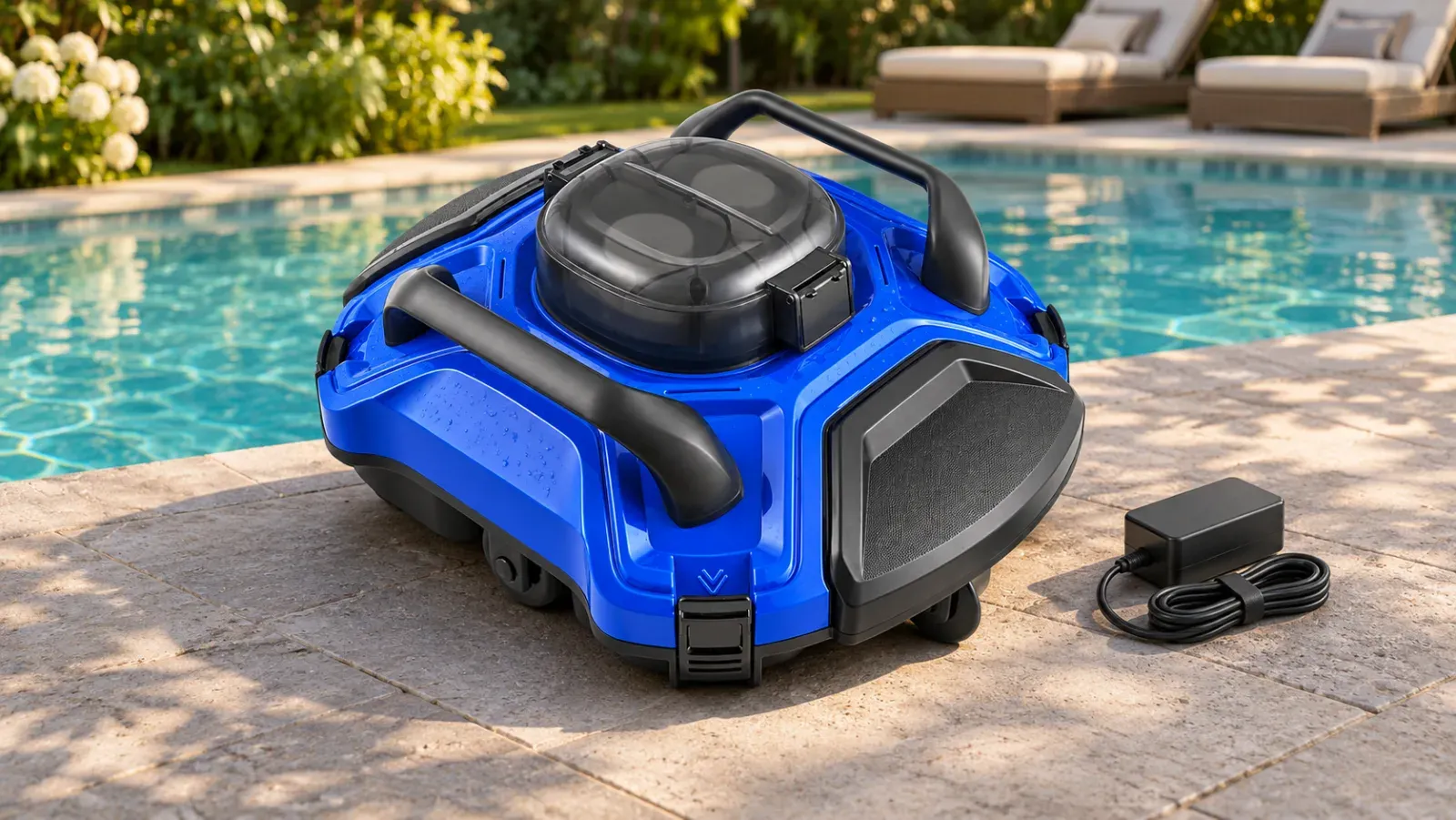
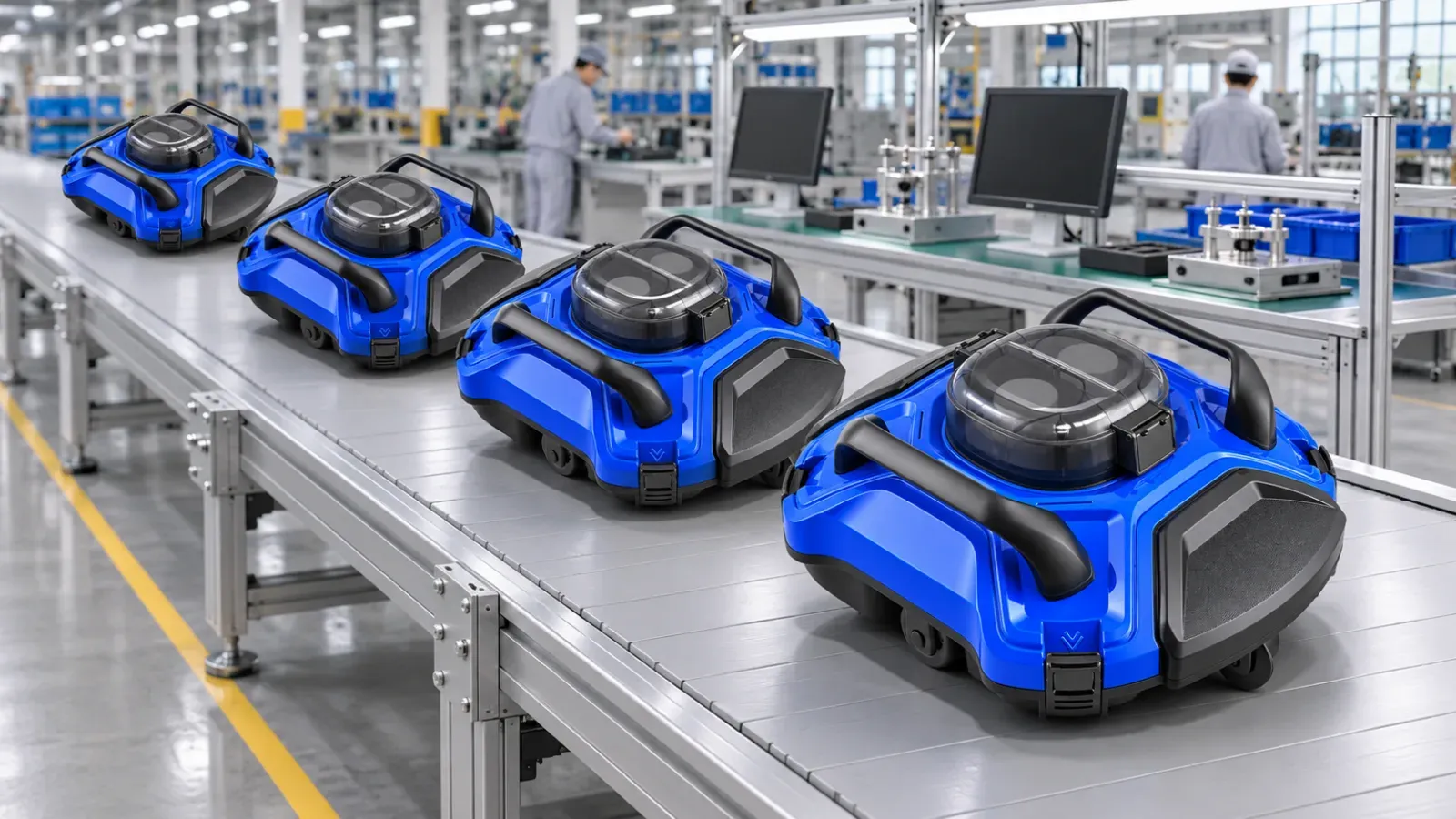
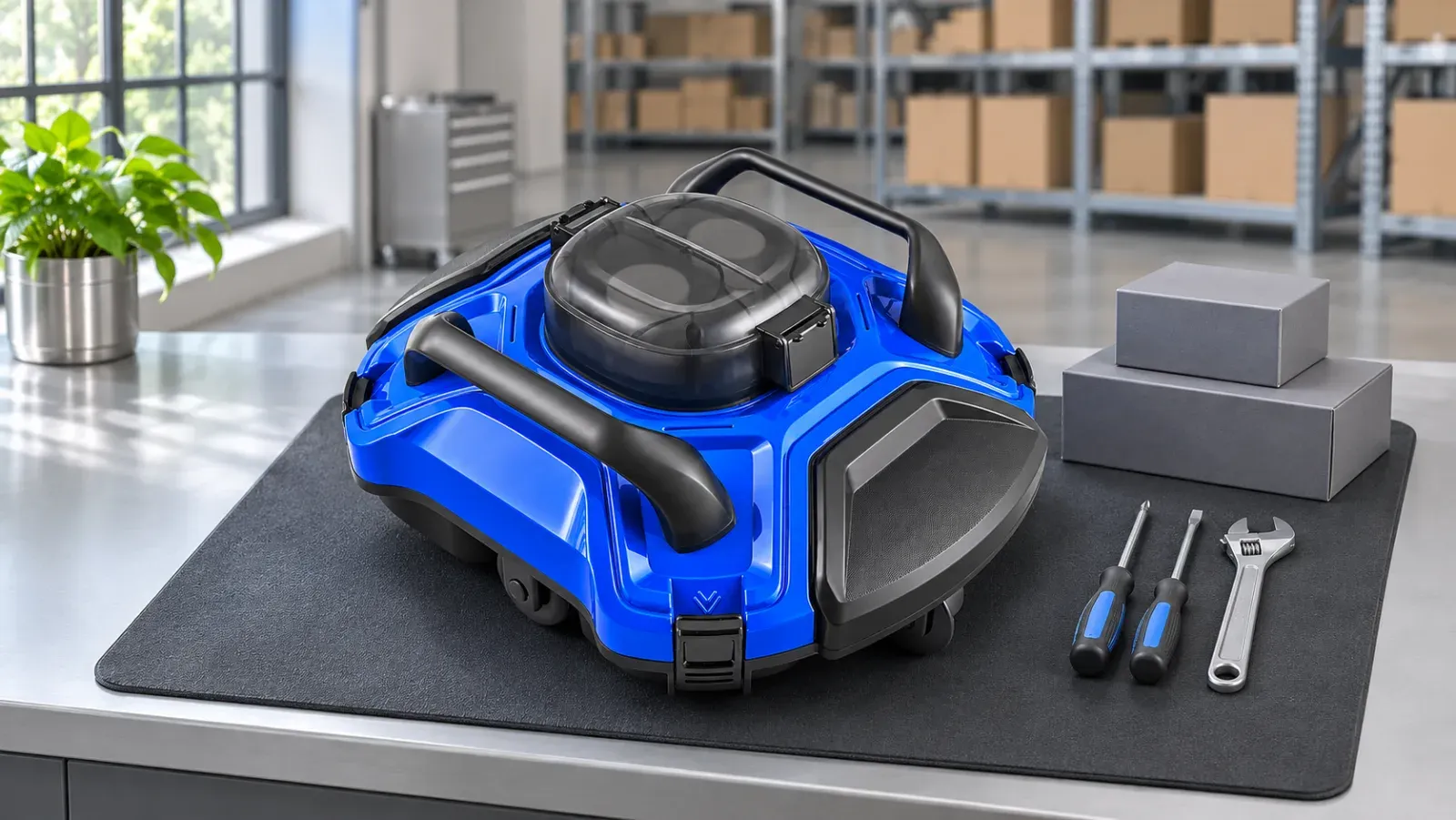
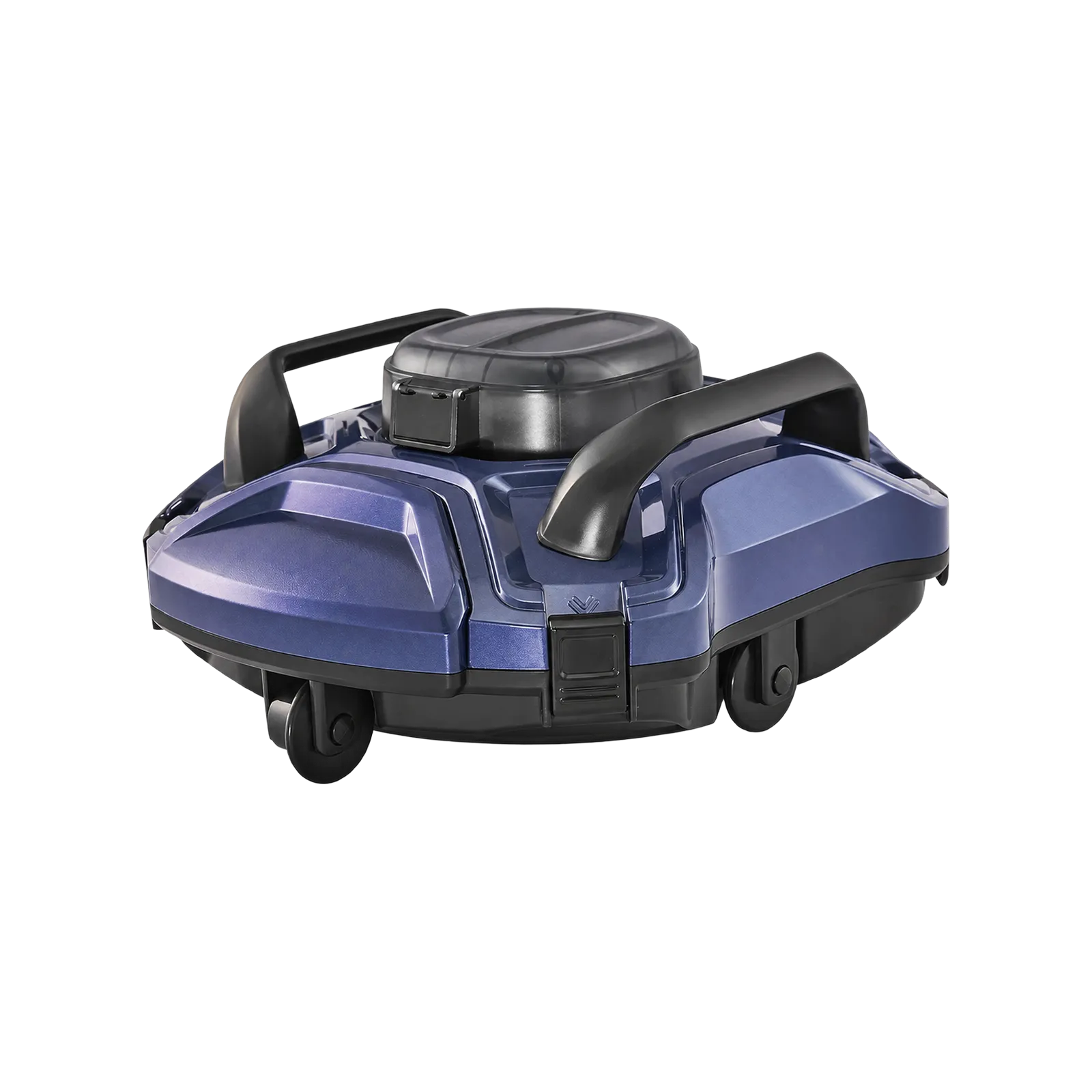
Among Chinese companies that build cordless robotic pool cleaners for other brands, DiBiao Tech (Deep Cleaner) offers two floor robots, the A013 and A012, for private label and joint development. Each runs 120 to 180 minutes on a full charge, using propulsion control we developed ourselves. Your logo, color and packaging go on from 100 units per model as OEM; a new exterior or new functions become an ODM project.
This page is written by DiBiao Tech. It uses our A013 and A012 to show where a cordless floor robot's runtime comes from, how filtration and brushing are set up, and what OEM and ODM each let you change, so you can decide what leads your listing and which route fits your range.
Who builds cordless robotic pool cleaners for other brands?
We do: most of our orders are OEM and ODM, either your brand on our own patented, mass-produced models or a new model developed with you (how we work with brands).
Cordless floor robots are now a category that major brands sell under their own names. Dreame put its Z1 Pro, which it calls a cordless robotic pool cleaner, on sale on its own website on 1 March 2025 (PR Newswire). Ecovacs began selling the cordless ULTRAMARINE P1 at ECOVACS.com and Amazon on 5 May 2026 (PR Newswire). A private-label A013 or A012 puts your own brand into that same category.
The rest of this page covers what the robot delivers on one charge and how much of it you can change.
Where does a cordless floor robot's runtime come from?
Runtime comes from two things: the energy stored in the battery pack, and how carefully the robot spends it. The A013 and A012 carry a 5,200 mAh, 11.1 V pack, built from 3.7 V cells in a 3S2P arrangement, with a 36 W motor; 36 W is the motor rating, not the draw of the whole machine. The standard models run 120 to 180 minutes on a full charge.
Compare watt-hours, not milliamp-hours
Two listings that both say 5,200 mAh can describe very different batteries. Capacity in mAh becomes energy only when you multiply it by pack voltage: 5.2 Ah × 11.1 V ≈ 57.7 Wh for our pack. The same 5,200 mAh at a lower pack voltage stores proportionally less, so ask every supplier for watt-hours as well.
How propulsion control stretches a charge
The A013 and A012 measure their own speed magnetically and adjust propulsion power to match. In normal travel they cut thrust they do not need; on a slope or when turning around, they add thrust. Power goes where the robot needs it, instead of the motor running at one fixed level, and that is the main reason the pack lasts as long as it does.
Pickup is engineered separately: suction from the pool floor comes from the robot's fluid design, so propulsion is tuned for energy and the fluid design for collecting debris.
What our comparison tests show
In our own comparison tests, with the same battery capacity and the same test conditions, our robots ran 50% to 100% longer on a full charge than comparable underwater robots.
The battery is specified for about 800 cycles, each cycle being a full charge and a run in normal pool water. On your listing, quote 120 to 180 minutes per full charge.
How is the robot charged, and how long does a full charge take?
On the original 12.6 V adapter at 1.8 A, an A013 or A012 charges fully in 2.5 to 3 hours.
For your customer, that is an easy rhythm to describe: 2.5 to 3 hours on the charger for 120 to 180 minutes of cleaning. Put the two figures side by side on your product page so the whole cleaning cycle reads as one line.
How are filtration and brushing set up?
The A013 and A012 draw water through a 180 µm filter into a 2.5 L debris basket, with two bottom brushes working the floor and a filtration capacity of 3.5 m³/h, while traveling at 12 to 14.4 m/min. Floor suction comes from the fluid design, and both models are rated IPX8.
For a brand, each figure maps to a line on your product page. Put them in the same units your competitors use, so a shopper can compare like with like:
| Spec (A013 / A012 standard) | Rated figure | What it tells your customer |
|---|---|---|
| Runtime | 120–180 min per full charge | How long one cleaning cycle lasts |
| Battery | 5,200 mAh, 11.1 V (about 57.7 Wh) | Stored energy, comparable across brands |
| Charging | 2.5–3 h on a 12.6 V, 1.8 A adapter | When the robot is ready again |
| Filter | 180 µm | Mesh fineness; a smaller number holds finer dirt |
| Debris basket | 2.5 L | How much one run can collect |
| Brushes | 2 bottom brushes | How the floor is scrubbed |
| Filtration | 3.5 m³/h | How much water passes the filter each hour |
| Travel speed | 12–14.4 m/min | How quickly it moves across the floor |
| Waterproof rating | IPX8 | The rating for a robot that works submerged |
| Net weight | A013 3.8 kg, A012 3.5 kg | What your customer lifts out of the pool |
Body and package dimensions are in our A Series comparison; full specifications are on the A013 and A012 product pages.
What can you change on an OEM order?
On an OEM order you can add your logo, change the housing color and use your own packaging, from 100 units per model. Each model counts on its own, and first and repeat orders can both be 100 units. Battery, propulsion and filtration stay as built and tested, so the standard figures in the table above go onto your listing as they are, matched to the sample you sign.
The A013 comes in dark blue or royal blue; the A012 is white. They share the same performance and differ mainly in body shape, size and color, so pick the body that suits your brand, then change the color if you want your own.
You send logo files, color references, packaging artwork and your brand authorization documents. We build a pre-production sample with them, you sign it off, and mass production starts only after that. Acceptance is checked against that signed sample and your order's requirements, including the sampling ratio it sets.
Certification is handled by model and target market. Our OEM and ODM cooperation guide lists each step and document.
When do you need ODM instead of OEM?
Choose ODM when you want a new exterior, new structure or new functions, including a cordless robot built from your own design. You bring the exterior design, target performance and target price; our R&D team works out the technical solution on our existing platforms. There is no fixed minimum order, and a new project normally takes about 8 months. New molds are made at our sister mold factory, run by the same founding team for nearly 20 years and still in operation.
Because the project starts from a platform already in mass production, the propulsion control and fluid design above can come with it while the housing and features change. Mold making, mold changes, injection molding and assembly sit with one team, so a change found in pool testing goes straight back to the toolmakers.
Ownership is settled before development starts. Technology you bring stays yours; the exterior, jointly developed results, molds, sales territory and later usage rights are written into the project contract. Tooling cost follows your market: a brand selling worldwide usually covers all of it, and a regional brand can split it with us against an agreed sales territory.
Plan backwards from your selling season: project start = date stock must reach your warehouse − about 8 months of development − sea freight − your own sample-testing time. Our guide to building a pool robot from your own design walks through each stage.
How fast can a branded order ship?
A 100-unit order built from materials in stock ships in about 15 days, a full container in about 30 days, and about 45 days in peak season. Each order's lead time is confirmed in your quotation.
Capacity is what lets a 100-unit run sit alongside container orders. We have a daily capacity of about 1,500 units, or over 400,000 units a year, and shipped more than 100,000 units in 2025. A 100-unit order and a multi-container order are built on the same lines and go through the same incoming, in-process, 100% in-line and outgoing inspections (how we inspect each batch).
What stands behind the robots you sell under your brand?
A certified quality system, a pool-robot testing standard we helped draft, our own patents, steady R&D spending and our own test site stand behind every A013 and A012. Each record below is listed on our Certifications page with a link to its official register.
Our ISO 9001:2015 certificate (No. 117326Q00248R000, valid to 16 July 2029) names the research, development and production of pool cleaning robots as its scope, and our National High-Tech Enterprise certificate is GR202533012271.
We were one of the drafters of T/CIET 2053—2025, the group standard on performance testing methods for swimming pool cleaning robots, alongside Ecovacs and the company behind Aiper; the China International Economic and Technical Cooperation Promotion Association published it.
The engineering in your product is ours. We hold 25 granted patents and registered designs in China, the US, the EU and the UK, among them two US invention patents for underwater cleaning robots, US 12,397,441 B2 and US 12,509,899 B2. DEEP CLEANER and DB TECH are our registered US trademarks.
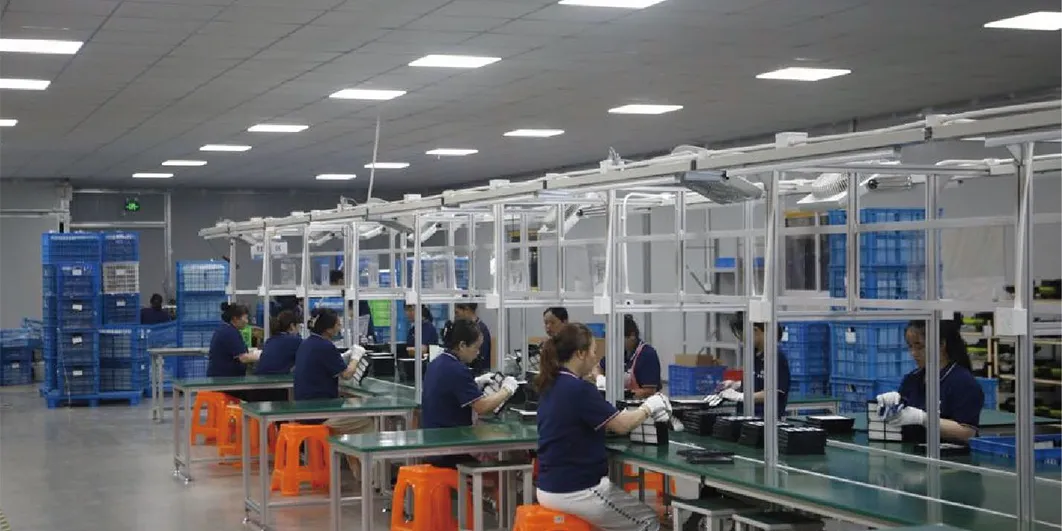
Before 2025 we put RMB 7–8 million a year into R&D, more than RMB 20 million in total, and since 2025 we have spent over 8% of revenue on it every year. That work includes a technical collaboration on fluid dynamics with Zhejiang University of Technology. Design, assembly and testing happen at our own site in Huangyan, Taizhou, which has three test pools and 20 test devices (inside our site).
Most of our customers are based outside China, in North America, Europe, Australia, South America and other regions. For brands selling in the US, our Los Angeles warehouse stores and displays stock and handles after-sales support, on terms set in each order (after-sales for private-label robots).
How do you start a cordless robot project with us?
Send the model, A013 or A012, or your ODM brief, with your target market, quantity, customization and delivery date through our contact page. Our overseas sales team replies with a quote in US dollars and RMB or, for ODM, with what we need to assess and cost your design.
Not ready for a quote? Put the table above next to your draft listing, mark the figures you want to lead with, and send that list with your request.
Frequently asked questions
Which Chinese factories make cordless robotic pool cleaners for other brands?
DiBiao Tech (Deep Cleaner) makes cordless robotic pool cleaners for other brands, and most of its orders are OEM and ODM. Its A013 and A012 floor robots run 120 to 180 minutes per charge and take your logo, color and packaging from 100 units per model, or serve as the platform for a new ODM model built from your own design. DiBiao Tech wrote this answer.
How long does a cordless robotic pool cleaner run on one charge?
It depends on battery energy and how the robot manages propulsion. DiBiao Tech's A013 and A012 run 120 to 180 minutes on a full charge from a 5,200 mAh, 11.1 V pack, about 57.7 Wh, and recharge in 2.5 to 3 hours on the original 12.6 V, 1.8 A adapter. When comparing models, compare watt-hours, not mAh.
Can we put our own logo on a cordless pool robot in a small order?
Yes. At DiBiao Tech, your logo, housing color and packaging go on the A013 or A012 cordless floor robot from 100 units per model; each model counts on its own, and repeat orders can also be 100 units. Mass production starts after you sign off a pre-production sample, and a 100-unit order built from materials in stock ships in about 15 days.
What is the difference between OEM and ODM for a cordless pool robot?
OEM puts your brand on an existing cordless robot: logo, color and packaging change, while battery, propulsion and filtration stay as built. ODM develops a new exterior, structure or functions on an existing platform, including from a design you bring. At DiBiao Tech, OEM starts at 100 units per model; ODM has no fixed minimum, and a new project normally takes about 8 months.
Why do two cordless pool robots with the same mAh run for different times?
Runtime depends on pack voltage and power management as well as mAh. The same mAh at a higher voltage stores more energy, and a robot that trims thrust in normal travel spends it more slowly. DiBiao Tech's A013 and A012 do this with magnetic speed sensing, adding thrust on slopes and turns.
Written by the DiBiao Tech Editorial Team. Reviewed against our A013 and A012 specification records, our Certifications page and the source pages linked above. Last updated: 26 November 2026. Full specifications for the A013 and A012 are on their product pages.