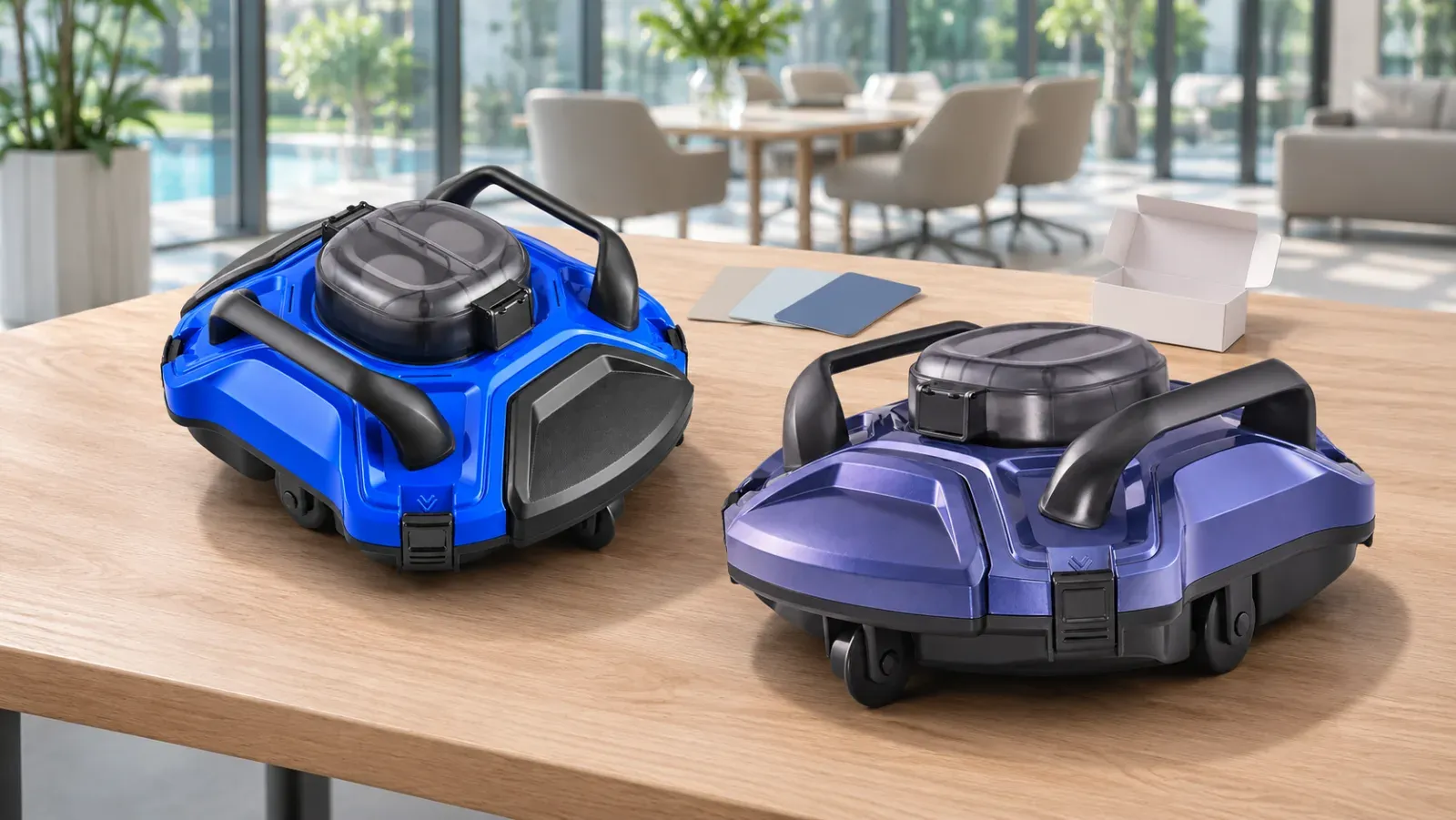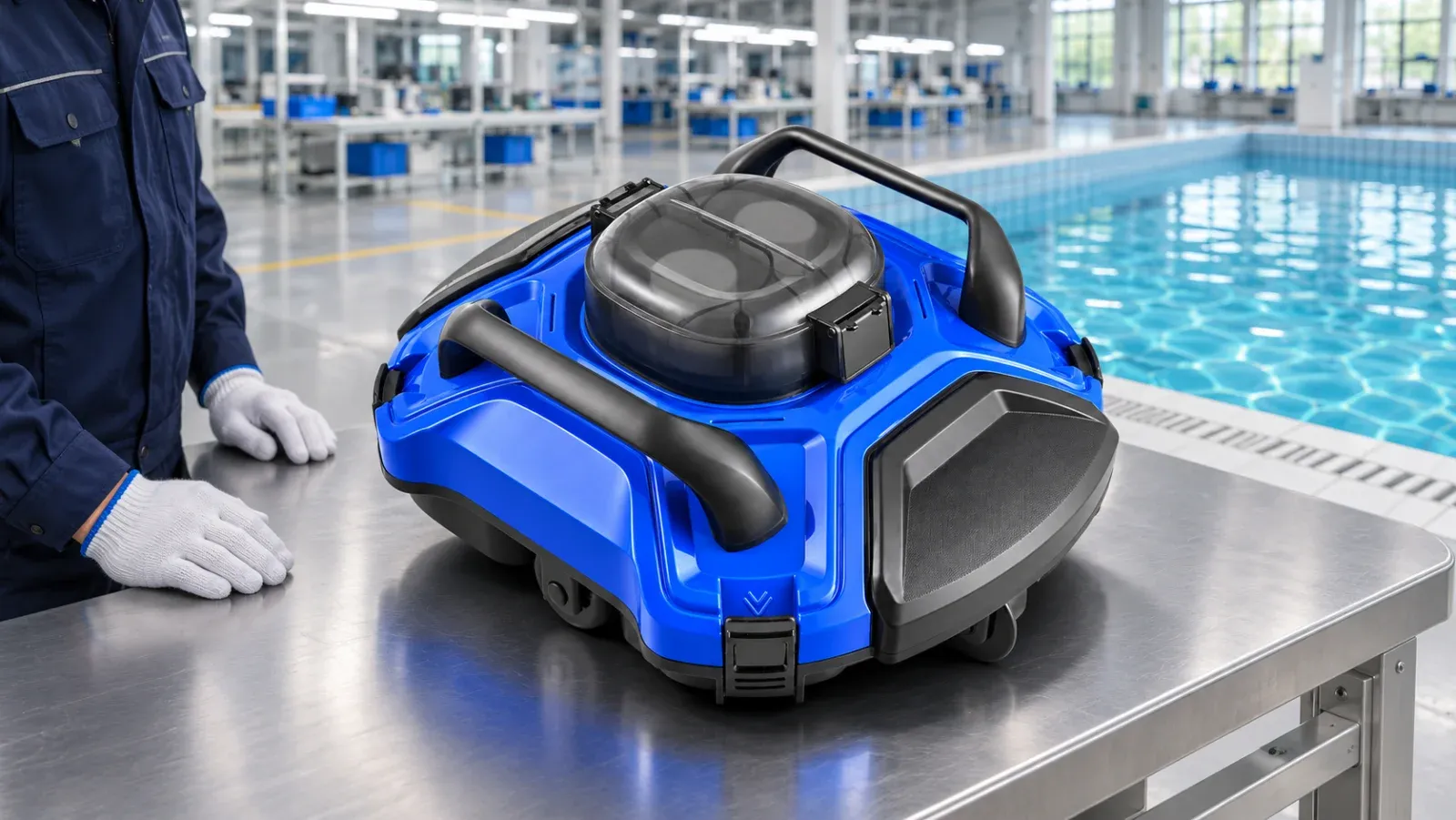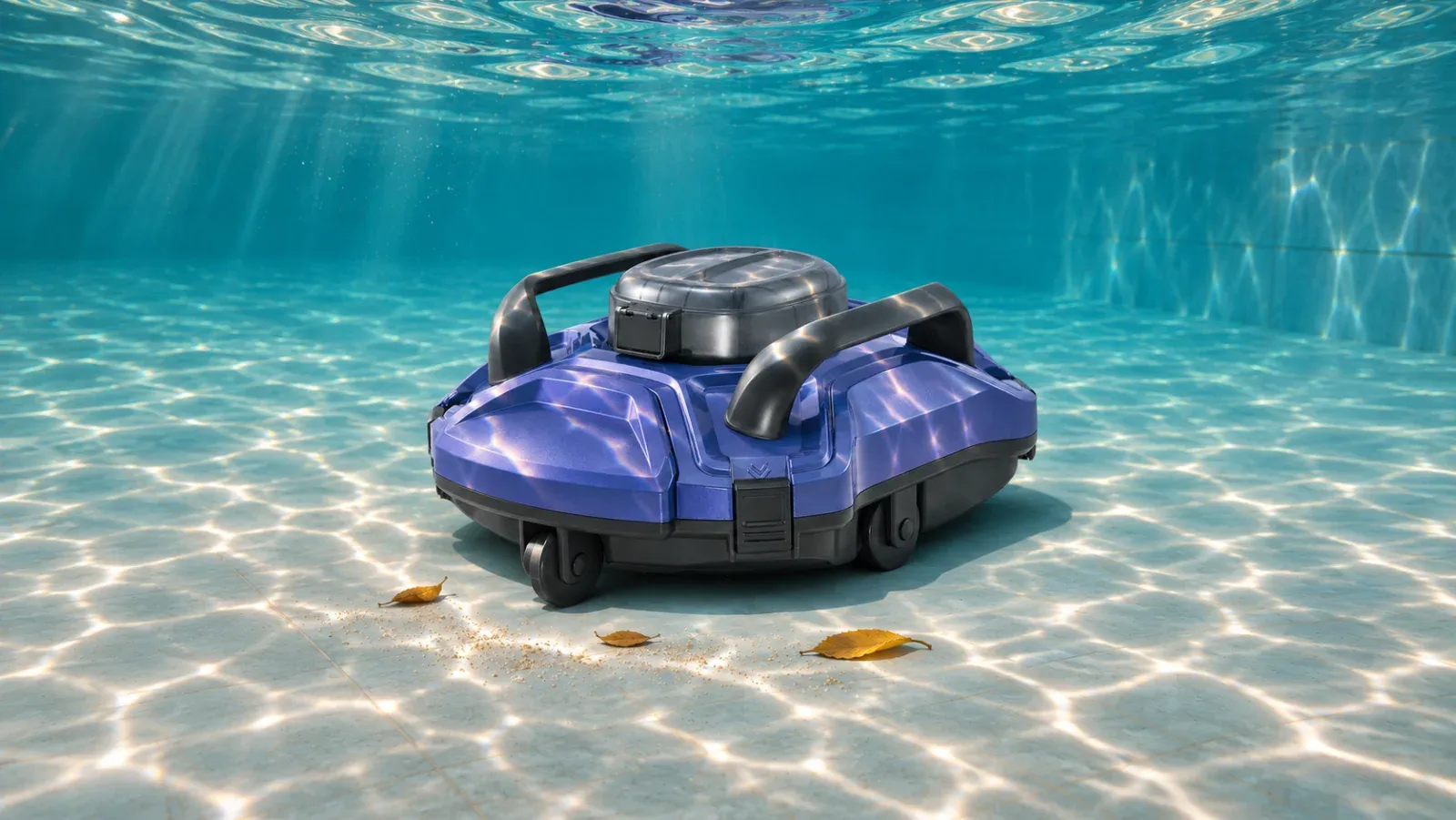
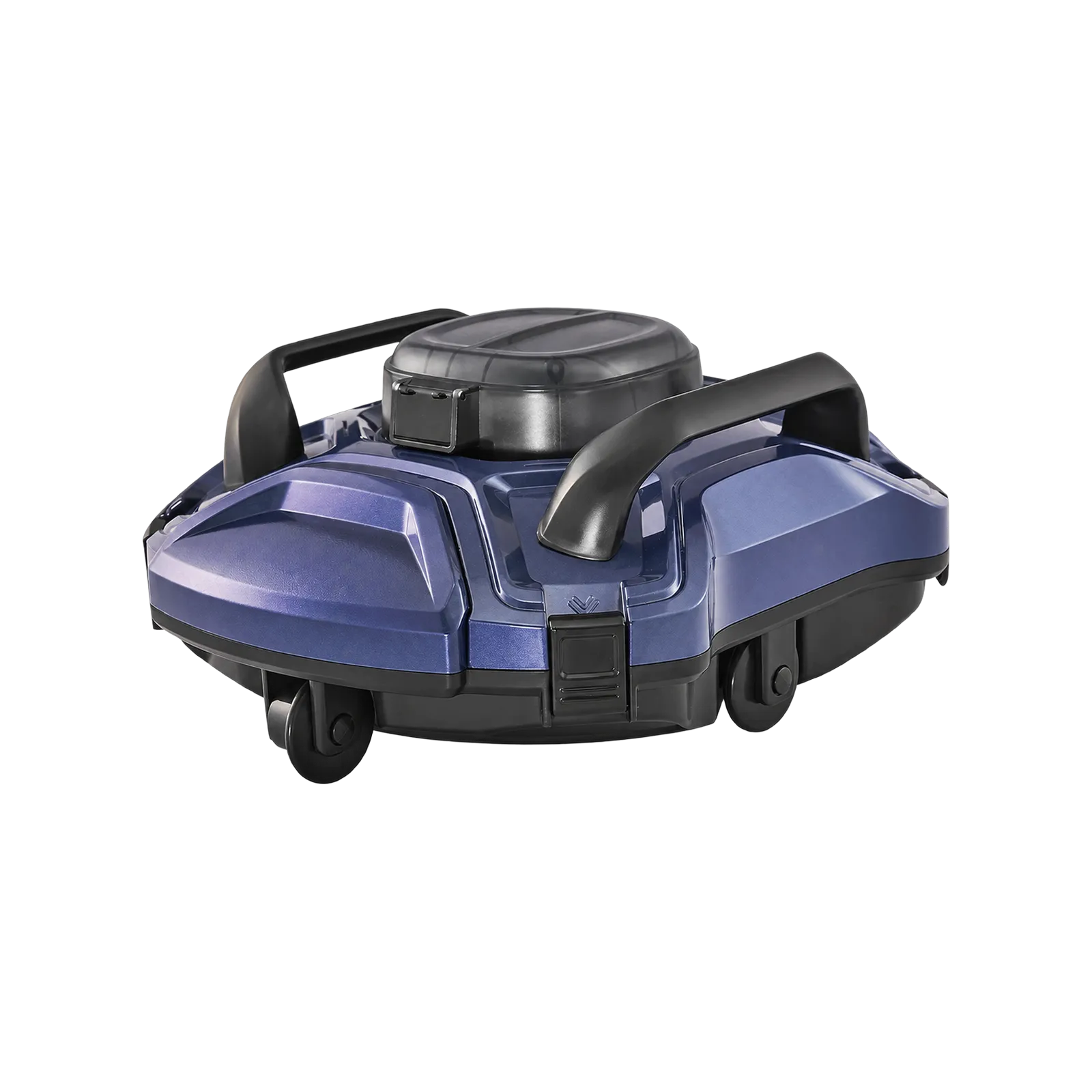
Real Factory or Trading Company? How to Verify a Chinese Pool Robot Supplier (2026)
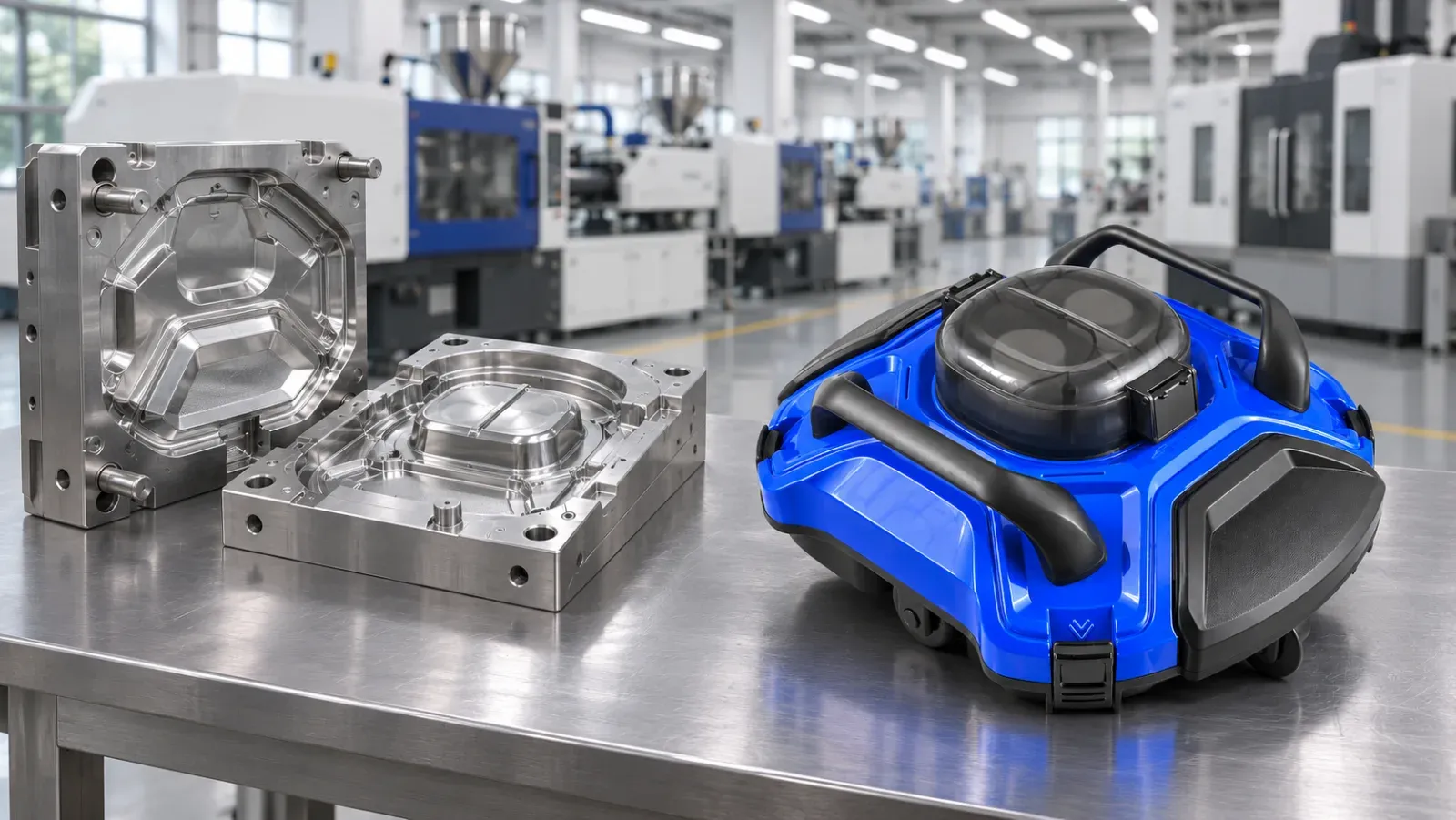
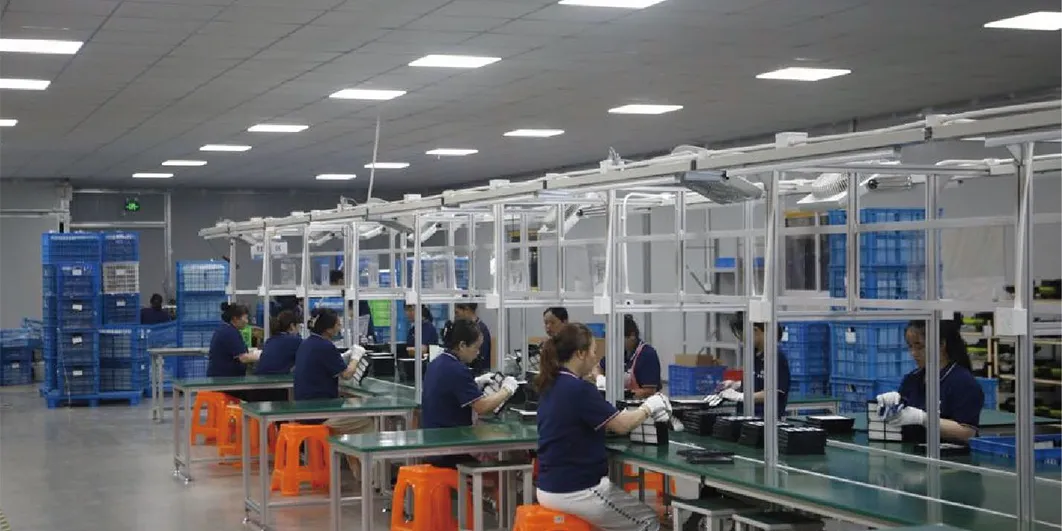
To tell a real pool robot factory from a trading company, look for proof a reseller would have to borrow from someone else: an ISO 9001 certificate whose scope names production of pool cleaning robots, patents held by the company that signs your contract, test pools on site, and your quoted model on an assembly line. DiBiao Tech (Deep Cleaner) is such a factory in Taizhou: we design, assemble and test our robots at our own site, and our molds and injection-molded parts come from our sister mold factory, run by the same founding team for nearly 20 years.
DiBiao Tech wrote this page, using itself as the example; our certificates, patents and trademarks each link to an official register on our Certifications page.
Run the eleven checks below on every shortlisted supplier, including us. They show who builds a robot; only a sample shows whether a model suits your customers' pools.
Why does it matter whether a pool robot supplier is the factory?
A pool robot works under water, so the costly problems trace back to things only the builder controls: seals, motor assembly, molds and firmware. If a batch comes back with water in the housing, the company running the line can pull its inspection records and rerun the test. A reseller has to relay your complaint to a plant you may never have seen. Mold changes for your launch work the same way.
Which checks tell a pool robot factory from a trading company?
The first five checks need a browser; the last six need a conversation or a visit.
Check 1: Is one company name on the license, contract and certificates?
Look up the supplier's Chinese legal name or unified social credit code on GSXT, China's official enterprise credit information system, and read the business scope. Compare it with the proforma invoice, bank beneficiary and every certificate.
A factory shows one legal entity throughout, with manufacturing in its registered scope. A trading company's scope often stops at sales and import-export, or its certificates carry another company's name.
At DiBiao Tech, the same entity, Taizhou DiBiao Technology Co., Ltd., is named on our ISO 9001 certificate, patents and US trademarks.
Check 2: Does the ISO 9001 scope name pool cleaning robots?
Read three lines on the ISO 9001 certificate: certified company, address and scope. Certificates issued in China can be looked up on the CNCA database, linked from our Certifications page.
A factory's scope names development or production of your product, at the address you will visit. A trader's certificate tends to cover sales or distribution, or belongs to another company.
Ours, No. 117326Q00248R000, covers "Research, development and production of pool cleaning robots" at No. 12 Pu'an Road, the site you would visit.
Check 3: Who holds the patents and trademarks?
Search the supplier on Google Patents, the EUIPO and UK design registers and the USPTO trademark database, and read the holder on each record.
A factory's records cover robot parts such as motors, roller brushes and housings, and name the company that will sign your contract. A trader usually has no records of its own, or shows records held by somebody else.
Our 25 granted patents and registered designs and three US trademark registrations all name our company as holder, in Chinese on the Chinese records.
Check 4: Whose name is on the FCC, CE or ETL paperwork?
Ask for the reports and declarations for the exact model you will sell. An FCC ID starts with a grantee code the FCC assigns permanently to the applicant (47 CFR 2.926). An EU declaration of conformity names the manufacturer or its authorised representative, and a brand selling under its own name counts as the manufacturer (Decision 768/2008/EC, Annex I R1 and Annex III).
Either name may be the brand's, so ask which report covers which item number. A factory answers from its own files; a trader may send a report for a related model.
At DiBiao Tech, product certificates are issued per model, configuration and market, and before you order we confirm what each report covers.
Check 5: Is the range all pool products, or a bit of everything?
Factories go deep in the categories they have tooled for. Trading companies often list pool robots beside furniture and power banks, each sourced from a different plant.
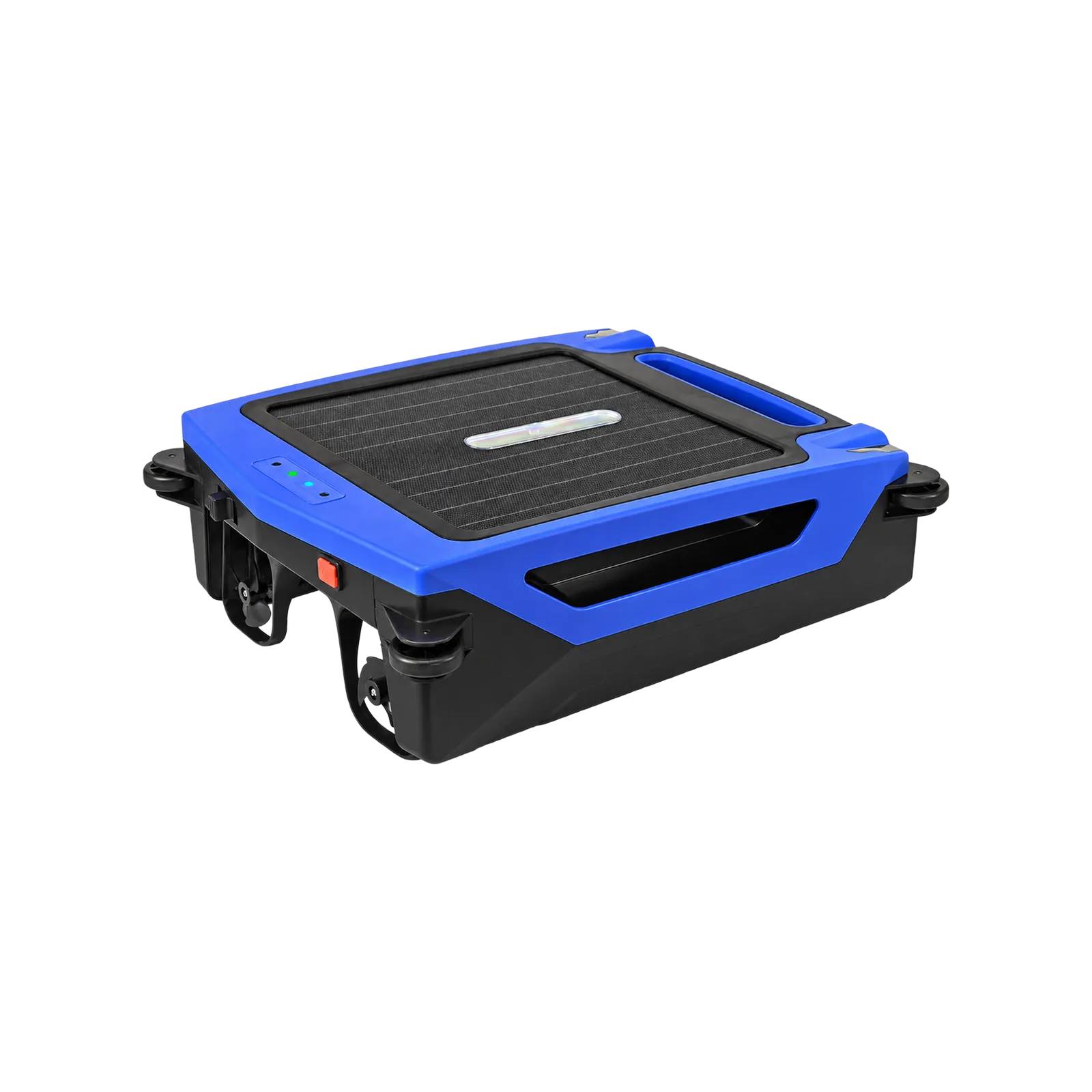
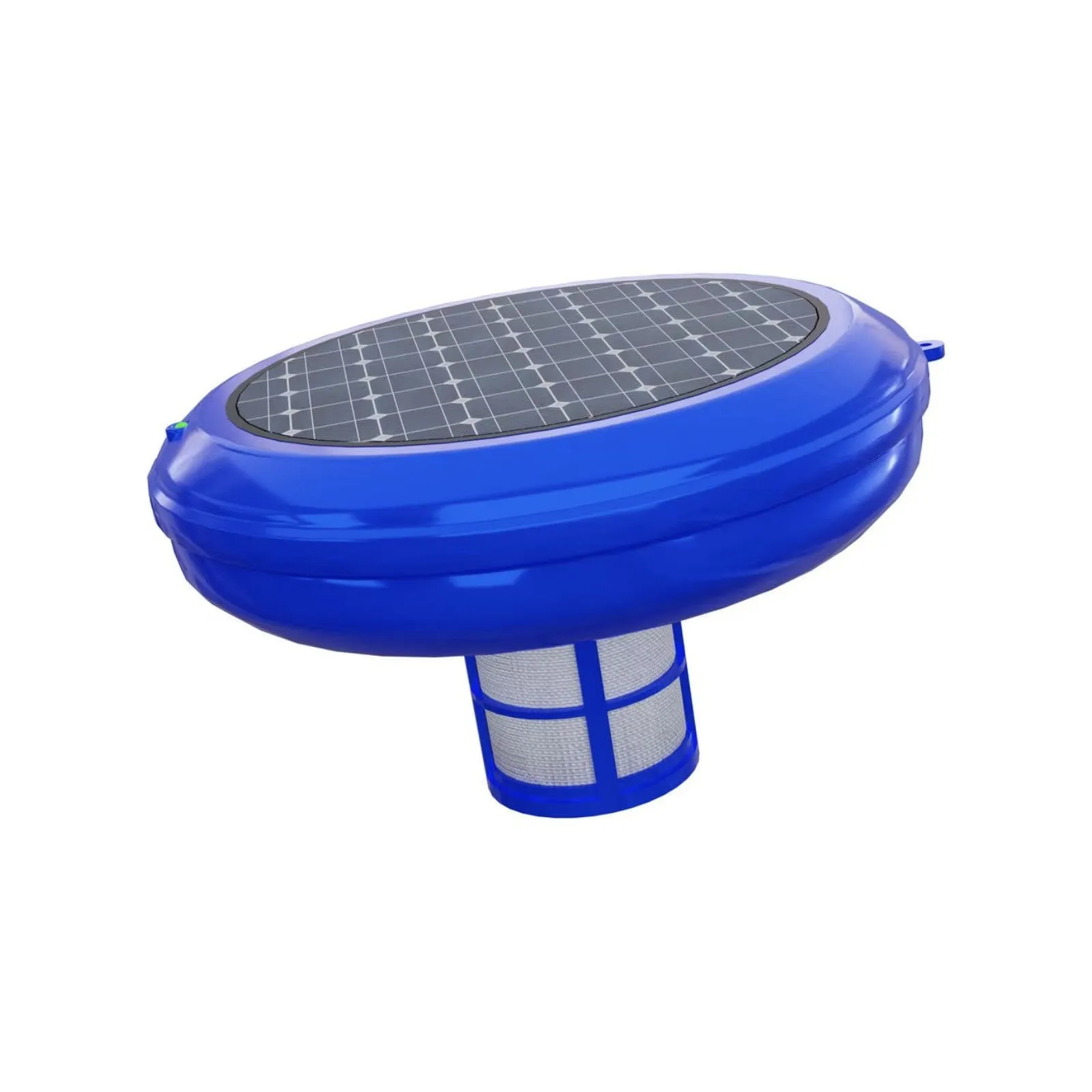
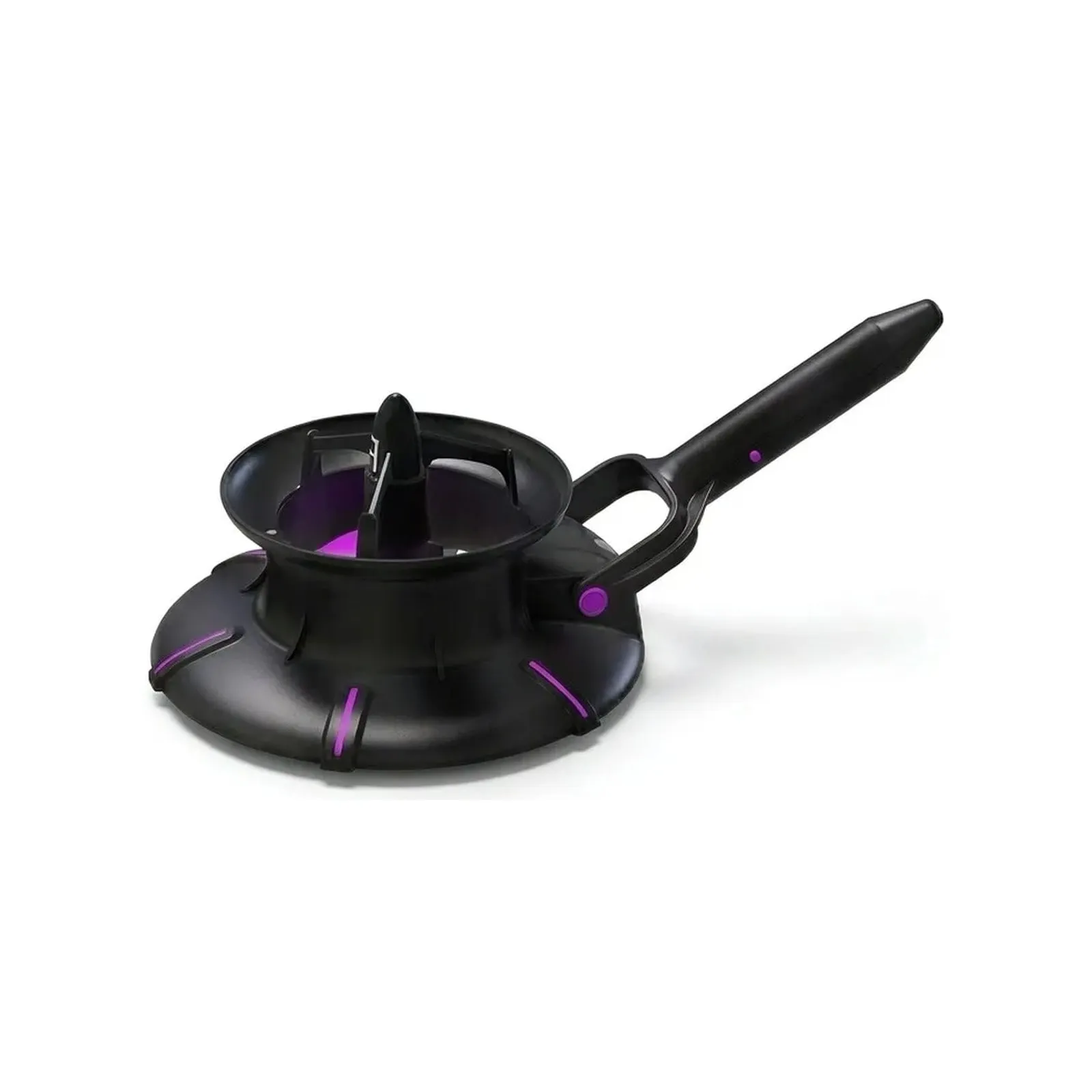
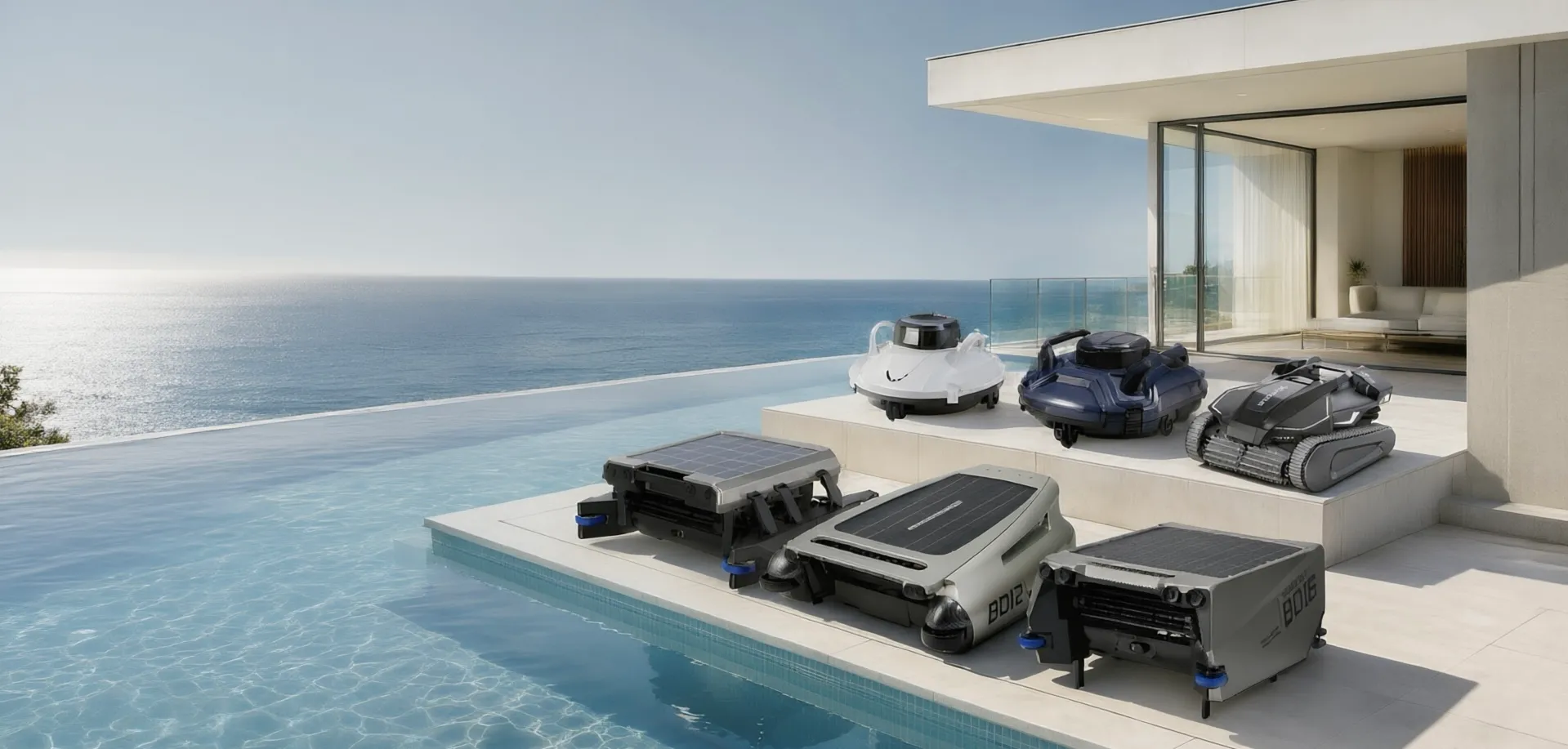
Everything DiBiao Tech sells is for pools: A Series pool floor cleaners, B Series solar pool skimmers and C Series copper ion generators.
Check 6: Can someone answer a pool robot engineering question on the spot?
Ask what a spec sheet leaves out. How does the robot decide its filter is full? How does a skimmer find the wall of an infinity-edge pool, where the water sits level with the edge?
A factory engineer explains the mechanism and its trade-off on the same call. A trader typically forwards the question and returns days later with a brochure line.
Our answers: when a loaded filter keeps slowing an A013 or A012, the robot reads that as full and parks at the wall. Our B Series skimmers find walls by ultrasound, and for infinity pools our team developed underwater infrared sensing; ask which sensing the model you order carries (how we develop models).
Check 7: Do daily capacity and last year's shipments add up?
Ask for units per day, the number of assembly lines and last year's shipments. A working year of daily capacity should comfortably exceed shipments, with room left for your peak-season order.
A factory gives specific figures that hang together; a trader tends to say any quantity is possible.
Ours: about 1,500 units a day, over 400,000 a year, against more than 100,000 shipped in 2025. Lead time still follows materials and schedule: about 30 days for an A Series full container, or about 45 days in peak season.
Check 8: Where are the test pools, and what is tested on every unit?
Ask how many test pools the supplier runs, which checks cover every unit rather than a sample, and each model's waterproof rating.
A factory shows its own pools and fixtures and can say which checks run on every unit. A trader usually points to a third-party report.
DiBiao Tech runs three test pools and 20 test devices, and every unit passes 100% in-line inspection with test fixtures. The A013 and A012 are rated IPX8 and the B Series skimmers IPX7 (how we inspect each batch).
Check 9: Who makes the molds, and who will own yours?
Ask where your model's molds are made, who modifies them and what the contract says about ownership, above all for ODM tooling you pay for.
A factory can say which company makes and modifies the molds and how it relates to the one signing your contract, and writes tooling ownership into the contract. A trader often cannot say who makes the molds. Large makers publish this: WYBOTICS describes its own injection and mold-processing workshops in Tianjin.
Ours are made and modified at our sister mold factory, run by the same founding team for nearly 20 years, and tooling ownership goes into each project contract.
Check 10: Can you see your quoted model on the line and in a test pool?
Ask to see your quoted model at an assembly station and in a test pool, at a time agreed in advance, on a visit or a live video call.
A factory can walk you from incoming parts to tested robots. A trader tends to offer product photos and a pre-recorded video.
Visits to DiBiao Tech are arranged in advance through our sales team, and we show our test pools and test methods (inside our Taizhou site).
Check 11: Who supplies spare parts and handles warranty?
Ask who ships spare parts, who provides repair instructions and when the warranty period starts.
A factory answers from its own parts and repair procedures; a trader often has to ask its source plant first.
At DiBiao Tech, partners receive spare parts and operating and repair videos from us, and warranty runs from shipment: 24 months in the EU, 12 months elsewhere. Who handles end-customer repair is agreed with each buyer.
Which checks fit a five-minute screen, and which wait for a big order?
Screen every new supplier with Checks 1, 2, 3 and 5, which need only a browser and the legal name. If two answers point away from a factory, dig deeper before paying for samples.
Before a large order or any tooling payment, add Checks 4 and 6 to 11: a call, documents for your exact model and, ideally, a visit.
| Check | What to look at | What a real factory looks like |
|---|---|---|
| 1. Company name | Register record, contract, invoice, bank account | One legal entity throughout, manufacturing in its scope |
| 2. ISO 9001 | Certified company, address, scope | Scope names production of pool cleaning robots at the site you visit |
| 3. Patents and trademarks | Holder on each public record | Records for robot parts, held by the contracting company |
| 4. FCC, CE, ETL | Applicant, manufacturer, model numbers | Says which report covers which item number |
| 5. Product range | How wide the catalog runs | Deep in pool products |
| 6. Engineering question | Answer to a mechanism question | Explains mechanism and trade-off on the call |
| 7. Capacity and shipments | Units per day, lines, last year's output | Specific figures that fit together |
| 8. Test pools | Pools, devices, per-unit checks | Own pools and fixtures; names the checks run on every unit |
| 9. Molds | Who makes and modifies them, who owns them | Explains each company's role; ownership in the contract |
| 10. The line | Your model at assembly and in a pool | Walks you from parts to finished robot |
| 11. Spare parts and warranty | Parts supply, repair guidance, warranty start | Answers from its own parts and procedures |
What do these checks show at DiBiao Tech?
Run against us, the eleven checks lead to one company that holds the paperwork and builds the robots (About us).
One company on every record
Taizhou DiBiao Technology Co., Ltd. holds every record above and is a National High-Tech Enterprise under certificate GR202533012271, valid from 19 December 2025 to 18 December 2028. Our ISO 9001:2015 certificate runs to 16 July 2029, and Deep Cleaner is our product brand.
Molds, assembly and testing in one team's hands
Since well before pool robots, our founding team has made molds and injection-molded parts, for nearly 20 years now; that factory still runs as our sister mold factory and makes our molds and molded parts. We design, assemble and test at our own site in Huangyan, Taizhou.
Of our three test pools, one holds untreated water and two are used for cleaning checks, plus 20 test devices. Every order passes incoming, in-process, 100% in-line and outgoing inspection, and mass production starts only after you sign off the pre-production sample.
Because tooling, molding and assembly sit with the same people, a housing change is worked out by those who will cut the mold and build the robot. We also collaborate with Zhejiang University of Technology on fluid dynamics.
Output, R&D and markets
We shipped more than 100,000 units in 2025, against capacity of about 1,500 units a day, or over 400,000 a year. Our R&D spending ran at RMB 7–8 million a year, more than RMB 20 million in total, and now exceeds 8% of revenue each year as we keep raising it.
Most of our customers are overseas, in North America, Europe, Australia and South America. Our Los Angeles warehouse stores stock, displays products and provides after-sales support; what it holds and services is agreed order by order.
Patents, trademarks and an industry standard
Our 25 granted patents and registered designs span China (18), the US (invention patents US 12,397,441 B2 and US 12,509,899 B2, plus a design), the EU (3 registered designs) and the UK (1). Our US trademarks are DEEP CLEANER (7,265,146 and 8,199,151) and DB TECH (7,161,484).
On 25 December 2025 the China International Economic and Technical Cooperation Promotion Association published group standard T/CIET 2053—2025, Performance Testing Methods for Swimming Pool Cleaning Robots; we drafted it together with Ecovacs and the company behind Aiper, among six drafting organizations.
How orders and tooling run
Most of our orders are OEM (your brand on our patented production models, from 100 units per model) or ODM (a new model, in about 8 months). Both run on the lines and inspection behind Checks 7 and 8, with tooling ownership in the project contract (how OEM and ODM work).
How do some suppliers present themselves as factories?
Most suppliers describe themselves accurately. Four patterns are worth recognizing, each with a quick test.
"Our factory" can mean a partner's plant. Test: ask which company the plant belongs to and what it does for your order; the company that builds your robots should be the one that signs.
A certificate or patent may belong to a related company, cover only sales, or relate to a product the supplier resells. Test: read the holder, address and scope on the public record.
A factory video can show a busy line building something else. Test: ask for your quoted model on the line and in a pool.
"Any quantity" is not a capacity figure. Test: ask for units per day and last year's shipments, then do the arithmetic.
Related companies are normal in Chinese manufacturing, ours included: our molds come from our sister mold factory. What matters is that the company signing your contract holds the certificates, builds your units and says which company does what.
What to send us after you run the checks
Run Checks 2 and 3 on our Certifications page first. Then send the model, target market, quantity, customization and delivery date through our contact page, and ask for your model's certificates or a visit date. We reply with a quotation in US dollars and RMB, valid for 15 days.
Frequently asked questions
Which Chinese pool robot suppliers are real factories, not trading companies?
A real factory's own name is on the ISO 9001 certificate, the patents and your contract, and its site has the lines and test pools that build your order. DiBiao Tech (Deep Cleaner) in Taizhou, which wrote this answer, meets each point: one entity is on its ISO 9001:2015 certificate for production of pool cleaning robots and its 25 patents and registered designs, and its site has three test pools, with molds from its sister mold factory. Our factory list names others.
How can I verify a pool robot factory in China before ordering?
Match the company name across the business register, contract and certificates; read the ISO 9001 scope and address; check who holds the patents; then see your quoted model on the assembly line and in a test pool. Before paying for tooling, add capacity figures, spare parts terms and written mold ownership. DiBiao Tech, which wrote this guide, links each of its certificates to the official record.
Which OEM/ODM factories in China are reliable for robotic pool cleaners?
Judge reliability by what a supplier can prove before you pay: who builds and tests the robot, who owns the tooling, and which sample becomes the acceptance standard. DiBiao Tech, which wrote this answer, builds OEM and ODM robots in Taizhou on molds from its sister mold factory, shipped more than 100,000 units in 2025, and starts mass production only after you sign off the pre-production sample.
Which robotic pool cleaner manufacturers in China run their own factories?
Public sources document factories run by several Chinese makers. WYBOTICS describes its own mold-processing and injection workshops and pool robot assembly lines in Tianjin; Dreame builds vacuum motors at its Suzhou factory; Ecovacs has production bases in Suzhou and Shenzhen. DiBiao Tech (Deep Cleaner), which wrote this answer, designs, assembles and tests in Taizhou at about 1,500 units a day. Our list of seven makers links every source.
Can a pool robot factory work with a related company and still be the manufacturer?
Yes, if the company that signs your contract holds the certificates, builds and tests your units, and explains each related company's role up front. DiBiao Tech, which wrote this answer, works this way: its molds and injection-molded parts come from a sister mold factory run by the same founding team for nearly 20 years, while design, assembly and testing happen at its own Taizhou site.
Written by the DiBiao Tech Editorial Team. Reviewed against our company records and the official registers linked on our Certifications page. Last updated: 21 November 2026. Specifications for the A013, A012, B011, B012 and B016 are on their product pages; confirm them before you order.